
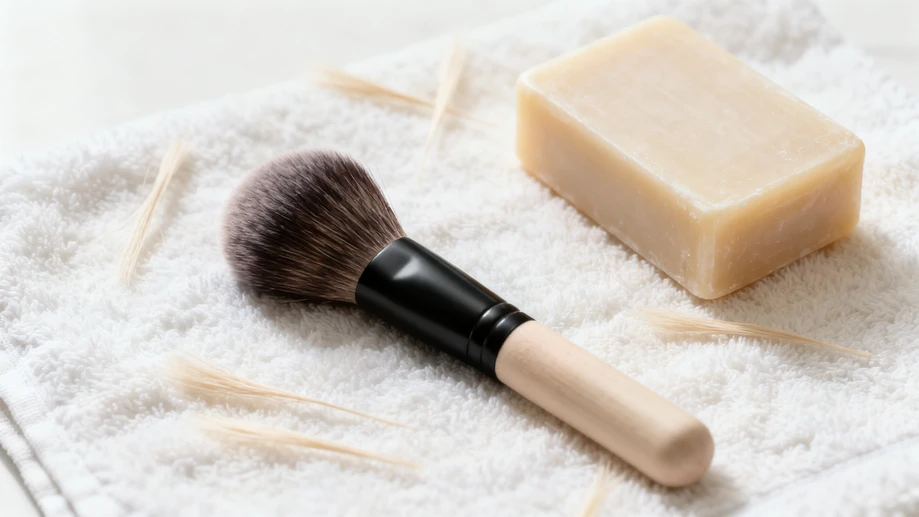
Most casual makeup wearers and new beauty learners never realize their frequently used loose powder brushes do not require a deep wash every single week
This often overlooked tiny beauty tip can help users extend the service life of their favorite powder brush while keeping daily makeup application smooth and evenly blended without annoying streaks
A large amount of mainstream beauty content in recent years has been emphasizing the importance of deep cleaning all makeup tools once every week, pushing most users to soak every single brush in cleaning solution, rub them thoroughly, and dry them completely within 24 hours. Many people follow this routine strictly, but notice that their once soft, fluffy loose powder brushes start to fray, develop split bristle tips, and leave obvious uneven powder streaks on their face after just two or three months of use. Most of them attribute this problem to poor product quality and throw the brushes away to buy new ones, leading to unnecessary repeated costs that could be easily avoided with a tiny adjustment to cleaning habits.
The vast majority of high-quality loose powder brushes use natural animal hair or blended natural fiber materials, and each individual bristle on these brushes has a tiny layered scale structure on its surface. Under normal daily use conditions, a very small amount of natural lanolin and leftover ultra-fine loose powder particles will stay between these bristle scales, forming a thin, smooth protective layer that does not support bacterial growth at all. This subtle residual layer keeps the bristles separated and fluffy, prevents the brush from picking up too much powder in one dip, and delivers the light, diffused matte finish that people love for daily setting makeup.
Frequent deep washing strips away this special protective layer completely, as even mild brush cleansers will dissolve the natural lanolin locked between the bristle scales and wash off the fine powder particles that help keep bristles lubricated. Without this subtle lubrication, individual bristles rub against each other constantly during use, which leads to fast fraying and bristle hardening. Most users report that the very first use of a freshly fully washed loose powder brush often picks up far too much powder at once, leaving a thick, unnatural cakey layer on the face that requires extra minutes of blending to fix, wasting both product and morning routine time.
The correct low-effort maintenance routine for often-used loose powder brushes could not be simpler. After every single makeup application, users only need to run the bristles in gentle small circles across a clean, lint-free microfiber cloth for 10 to 15 seconds, and all the excess loose powder stuck to the bristle surfaces will fall off completely, leaving the brush fully fluffy for next use. This dry cleaning method introduces no extra moisture to the brush, never damages the thin protective layer on the bristles, and prevents the brush base, which holds the bristles in place, from staying damp for long periods and growing invisible mold that can irritate facial skin.
After three to four weeks of regular dry cleaning, a full deep wash is still needed to remove any trace of accumulated sebum that transfers from the face to the brush during normal use. For this deep cleaning step, people should choose mild, alcohol-free, non-alkaline cleansing products, rub the bristles gently in the same direction of the bristle growth to avoid tangling, squeeze out excess water softly instead of wringing the bristles hard, and hang the brush upside down in a cool, well-ventilated space to dry naturally. Users should never place the wet brush upright with the bristle side up, or use hot air from a hair dryer to speed up the drying process, as these mistakes will loosen the bristle root and cause massive unexpected shedding later on.
It is worth noting that this low-frequency deep cleaning tip only applies to makeup brushes that exclusively touch dry cosmetic products, including setting brushes, blush brushes, contour brushes and highlight brushes that never come into contact with liquid or creamy makeup formulas. Brushes used for liquid foundation, concealer or cream blush still need a full deep wash every three to five days, as leftover creamy cosmetic residues create a perfect breeding ground for bacteria that can cause unexpected closed comedones and red irritation on sensitive facial skin. Millions of beauty lovers who have switched to this adjusted loose powder brush cleaning routine find their favorite brushes last two to three times longer, and deliver far more natural even makeup results than the over-washed old ones, without any extra expensive tools or complicated steps required.