
How the common habit of hanging makeup brushes upside down to dry ruins your favorite beauty tools far faster than most people expect
Nearly every casual makeup user follows this popular drying trick without knowing it breaks down hidden adhesive layers inside the brush base that hold bristles firmly in place over months of regular use
Walk into any beauty creator’s social media feed or casual makeup tutorial online, and you will almost certainly see the same tip shared repeatedly: after washing your makeup brushes, hang them upside down from a rack, secured by their handles, so no leftover water seeps down into the brush base. Millions of people have adopted this practice over the past 15 years, treating it as a non-negotiable step in proper brush care that guarantees a longer usable life for every brush in their collection. Most users never stop to question the logic behind this tip, since it seems to make perfect sense at first glance, and they assume any tiny amount of water left near the ferrule, the metal ring that holds the bristles to the handle, would only cause unnecessary harm.
But a growing number of independent beauty tool technicians and seasoned makeup artists have spent the last several years testing this habit side by side with alternative drying methods, and the results consistently show that hanging brushes upside down does far more harm than good over time. When you hang a freshly washed brush with the bristles pointing straight toward the floor, gravity pulls every drop of leftover soapy water and clean rinse water directly down toward the ferrule, instead of letting it seep outward through the tips of the bristles. The adhesive that holds the bristle cluster locked inside the ferrule is not designed to stand up to prolonged, repeated exposure to pooled standing water, and every time you wash and hang the brush this way, a little more of that adhesive softens and breaks down.
This is why so many people notice that their favorite blending brush, which they spent a considerable amount of money on to get soft, even bristle distribution, starts shedding tiny stray hairs after just a handful of washes. They often blame the quality of the brush itself, or claim they did not rinse all the soap out properly during the cleaning process, but the real culprit is almost always the upside down drying method pulling water straight into the most sensitive part of the entire tool. The original tip that pushed everyone to hang brushes upside down came from a very specific context dating back to the 1970s, when most makeup brush handles were made of unsealed raw wood with no protective coating, and water seeping up into the wood would cause swelling, warping, and even mold growth deep inside the handle.
Today, nearly every mass produced and premium makeup brush on the market comes with a fully sealed handle, whether it is made of coated wood, smooth plastic, or lightweight aluminum, and none of these materials are damaged by small amounts of stray water that touch their top edge near the ferrule. That means the old warning about water ruining your handle is no longer relevant for 99 percent of the brushes people own and use on a daily basis, making the upside down hanging habit nothing more than a leftover outdated hack that actively damages your tools instead of protecting them. The correct, far more effective drying method takes almost no extra effort at all, and it delivers dramatically better results even after your first time trying it.
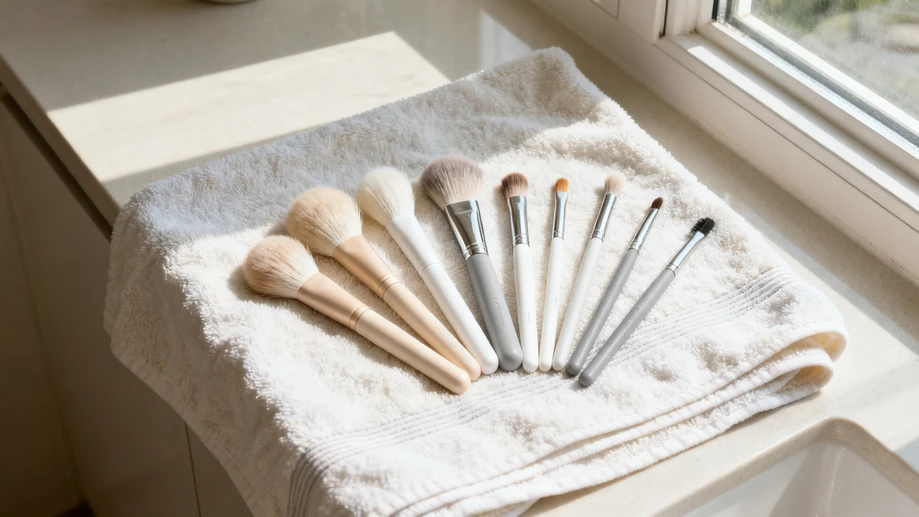
All you need to do after you rinse your clean brushes and gently squeeze out excess water from the bristle tips, is lay them flat on top of a thick, lint-free cotton towel that is laid out on a flat, stable countertop. You can gently reshape the bristles back to their original rounded or tapered form right after you set them down, so they do not dry into misshapen clumps that ruin your blending ability later on. Place the entire setup near a slightly open window or a spot with good, consistent cross ventilation, out of direct harsh sunlight that can dry out natural bristle fibers and make them brittle, and leave them for 6 to 8 hours until every last part of the brush is completely dry.
Over the course of a full year of regular cleaning, this small shift to your drying routine will double or even triple the average usable lifespan of every brush in your collection, cutting down the amount of money you spend replacing worn out, shedding applicators significantly. You will also notice that the bristles stay far softer and more evenly distributed for much longer, so you never get streaky, patchy makeup application from stray hairs or misshapen bristle clusters. Even people who have been using the upside down drying method for a decade or more can make this switch immediately, and they will see a noticeable reduction in stray hairs falling out of their brushes after every wash after just two or three cleaning cycles.