
Most people never realize their common daily drying habits for used makeup brushes are quietly ruining the soft fine bristle texture
This easy to overlook tiny detail will extend the service life of your favorite makeup tools and keep your daily makeup application process far more hygienic than you expect
If you have ever washed your makeup brushes after a full week of heavy use, you are very likely to put them upright in a glass or pen holder by the sink, letting the residual water drip down the bristles naturally as you walk away. This seems like a perfectly reasonable labor-saving choice, and you might even praise yourself for thinking of such a simple and unobtrusive arrangement that does not take up extra counter space. Few people stop to think that this seemingly smart move is the number one cause that turns your previously soft and fluffy brush heads rough, crispy and full of stray hairs after just two or three months of use.
The hidden risk hides in the connection point between the bristle cluster and the brush handle, which is usually fixed with special adhesive wrapped inside a thin metal ferrule. When you place the wet brush upright with the head facing up, all the water that does not drip out will flow downward along the bristles and seep into the gap between the ferrule and the handle, gradually dissolving the adhesive layer that holds the whole structure together. Even if the handle is made of solid plastic instead of porous wood, the accumulated stagnant water in the narrow gap will breed invisible mildew that transfers to your facial skin the next time you pick up the brush, causing unexpected tiny red bumps and itchiness that many people mistakenly attribute to new cosmetic products.
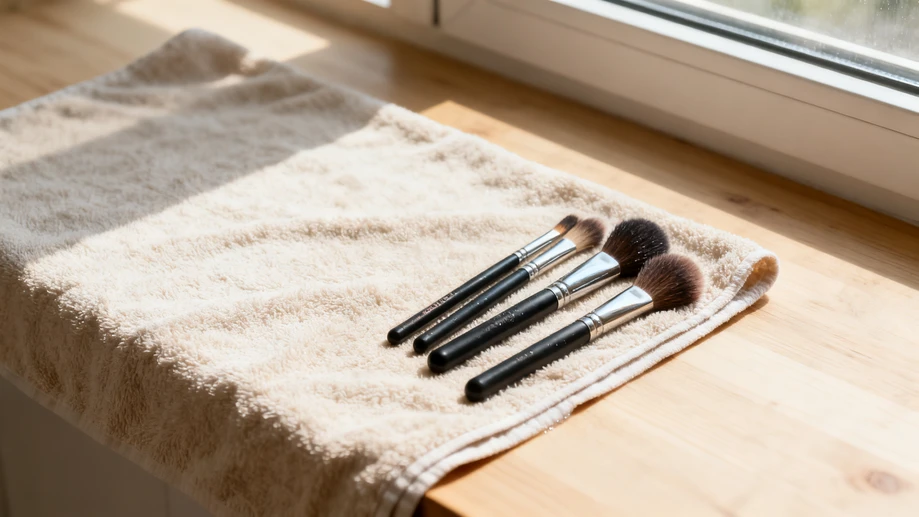
The correct low-cost drying method that almost no beauty tutorials emphasize is far simpler than most people assume. All you need is a clean, lint-free cotton towel laid flat on a dry, airy tabletop away from direct sunlight, then arrange all the freshly washed brushes on the surface of the towel gently, slightly tilting the brush head over the edge of the towel to keep the bristles in their original fluffy shape without being squeezed into a flat patch. You do not need any extra specialized drying rack, and the whole process will not take any more storage space than leaving the brushes standing by the sink.
People who stick to this tiny adjustment for more than half a month will find out the obvious difference it brings immediately. The old fluffy powder brush you have used for two full years will no longer shed small strands of hair on your foundation, and the soft blending eye shadow brush will not develop the hard sharp edges that scratch your delicate eyelid skin. Many people even find that they do not need to replace their frequently used core makeup brushes for three to four years, as long as they follow this drying rule every time they finish washing.
This small unnoticeable fact also reminds people that maintaining good makeup tools never requires huge budgets or fancy high-end cleaning products. Most of the time, a subtle adjustment to the most overlooked daily step can bring far more satisfying effects than any expensive dedicated care product. Forming such a small good habit also reduces unnecessary waste of old makeup tools that could still work perfectly, fitting in with the low-carbon and environment-friendly lifestyle that more and more people are pursuing these days.