
Skin Elixirs: The Science Behind Your Bathroom Shelf
Decoding the silent chemistry that transforms daily rituals into radiant results
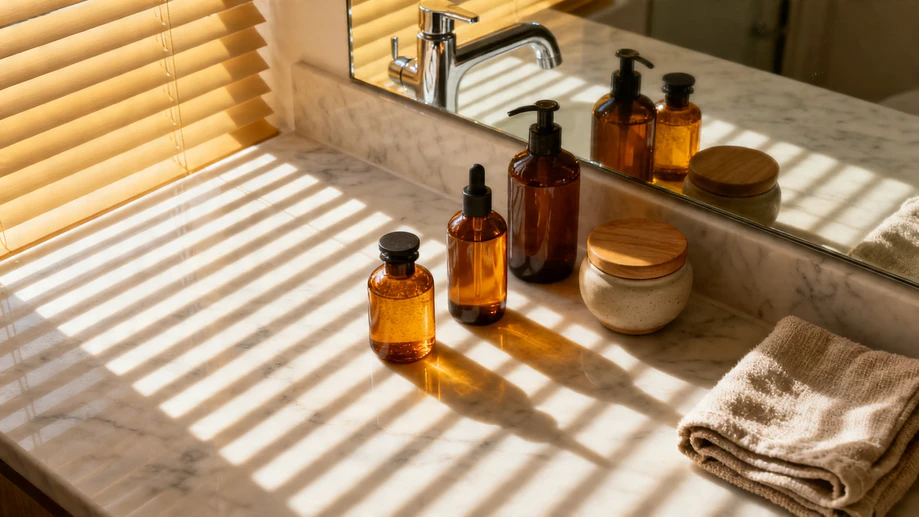
Morning light filters through a frosted bathroom window, catching the elegant silhouette of amber-toned serum bottles aligned on a marble countertop. Beside a ceramic sink basin, these glass vessels stand like miniature sentinels against humidity and time. Their placement follows an unspoken geometry – cleansers near the faucet, treatments arranged by viscosity, sunscreens closest to natural light sources. This spatial choreography isn't accidental; it reflects the harmony between scientific formulation and domestic environment. Cool, dry surfaces preserve active ingredients, while opaque containers shield light-sensitive compounds. The very architecture of your vanity becomes the first guardian of potency.
Consider the humble cleanser, resting where steam rises from shower tiles. Its pH-balanced formula exists in symbiotic relationship with this humid microclimate. Gel textures dissolve excess oil without stripping natural lipids, while cream variants form protective barriers on moisture-deprived winter skin. Across the shelf, exfoliants containing fruit-derived AHAs await their turn near folded linen towels. These alpha-hydroxy acids work gently at room temperature, breaking down dead cell bonds like microscopic demolition crews. Their glass packaging prevents interaction with plastic polymers that could destabilize the formula – a silent dialogue between chemistry and containment.
Moisturizers reveal nature's intelligence in emulsion science. Those in opaque pumps maintain delicate water-oil balances, their ceramide-rich formulas mimicking the skin's own barrier. Observe how thicker night creams occupy ceramic jars, their dense textures preserved by cool stone interiors. Meanwhile, fluid hydrators in dropper bottles stand upright, preventing oxidation. This spatial arrangement mirrors their functional hierarchy: immediate hydration near the front, intensive repair treatments positioned further back. Each product's viscosity dictates its placement, with runny toners safely distanced from electronics to prevent accidental spills onto charging devices.
Sun protection forms the tactical frontline. Tinted bottles perch on windowsills or near entryway consoles, their UV-blocking minerals physically reflecting light like microscopic mirrors. These formulations thrive in transitional spaces where temperature fluctuations occur, their zinc oxide particles remaining stable whether facing bathroom humidity or hallway drafts. Notice how spray mists occupy lower shelves – their propellant-free mechanisms avoiding heat exposure. The aluminum casing of aerosol varieties conducts ambient temperature, maintaining internal pressure equilibrium with seasonal changes in your home environment.
Seasonal shifts transform the skincare landscape. Summer brings translucent gel moisturizers to refrigerator doors, their cooling textures constricting capillaries under heat. Come winter, rich balms migrate bedside, their shea butter melting at skin-contact temperature. Even storage evolves: clay masks in dark cabinets prevent drying, while vitamin C serums retreat from sunlit surfaces to preserve antioxidant potency. This environmental dance ensures products perform as intended – whether combating desert-like indoor heating or tropical humidity, each formulation finds its optimal habitat within your living space.
These silent alliances between chemistry and environment unfold daily in unassuming corners. From shower shelves where steam-activated formulas open pores, to bedroom vanities where night treatments absorb under moonlit windows, skincare integrates into domestic ecosystems. The true magic lies not in dramatic transformations, but in this sustained synergy – where science respects spatial boundaries, and our living spaces become partners in preservation. Every thoughtfully placed bottle represents a pact between human innovation and nature's rhythms.