
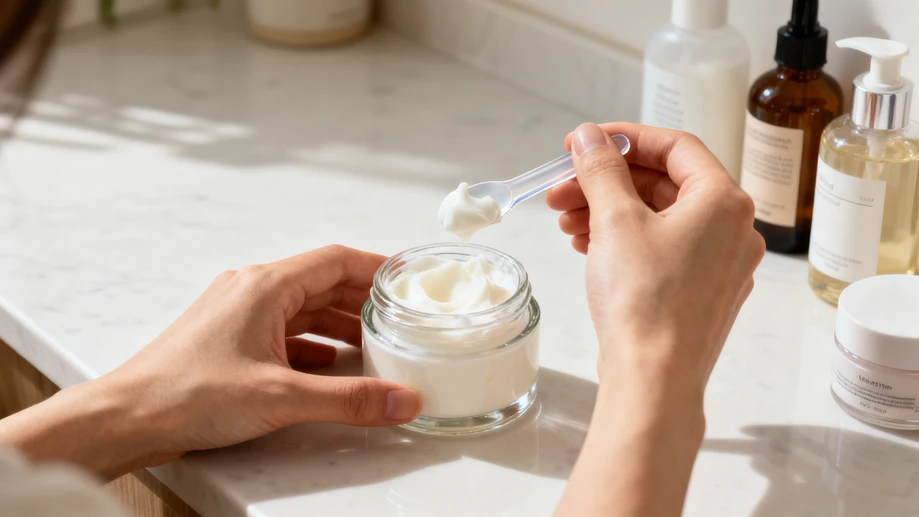
The tiny habit of using a dedicated spatula instead of fingers to dip into your face cream keeps your skincare products far longer than you expect
Most people ignore the invisible bacteria and residual sebum left on their fingertips that break down active skincare ingredients and turn your face cream jar into a hidden microbe breeding ground in just a few weeks
Almost every person who follows a daily skincare routine has done this at least once, if not every single morning and night: you finish washing your face, pat on your toner, reach straight for the open jar of face cream on your counter, and dip the tip of your index finger right into the thick, nourishing balm to scoop out a pea-sized amount for your face. Most people see this move as completely normal, even people who splurge on high-priced, high-performance skincare formulas will dismiss the little plastic or wooden spatula tucked inside the product box as a useless marketing gimmick, meant only to make the product look fancier on store shelves. It is easy to write the spatula off as unnecessary extra clutter, especially when you are in a rush to get out the door for work or fall half-asleep during your late night skincare routine, and you cannot be bothered to reach for a separate tiny tool when your clean hand is right there.
What almost no one stops to think about, however, is that no matter how thoroughly you wash your hands before you touch your skincare products, your skin naturally carries a base layer of resident bacteria that cannot be fully rinsed away with regular hand soap, even if you use a formula labeled antibacterial. On top of that, traces of sebum from the sides of your fingers, leftover residue of the exfoliant you used two steps earlier, or tiny flecks of dead skin that did not rinse off during face washing all get carried directly into the sealed, controlled environment of your face cream jar the second your fingertip breaks the surface of the balm. Most modern face cream formulas, especially those marketed for sensitive skin or packed with unstable active ingredients like vitamin C, centella asiatica or gentle retinol derivatives, use very mild preservative systems that are only designed to hold off contamination from external microbes for a short period. Every time you dip your fingers into the jar, you introduce a whole new batch of foreign particles that break down the preservative barrier rapidly, and before you know it, the smooth cream you opened three weeks ago has developed faint yellow spots, a weird sour smell, or a thin fuzzy layer of microbe growth on its top surface.
This hidden contamination issue does not just make you waste money on a half-empty jar of skincare you have to throw away ahead of its printed expiration date. Many people go for weeks trying to figure out why their skincare routine that used to work perfectly has started causing random small red pimples along their jawline, itchy flaring patches on their cheeks, or unexpected irritation even when they use nothing but the gentlest products on their skin. Those adverse reactions are very rarely caused by the formula itself, and far more often triggered by the hidden layers of bacteria you have been repeatedly dunking into your face cream over weeks of finger dipping. The active ingredients that made you buy the product in the first place also break down at a much faster rate once contamination sets in, which means you are no longer getting the brightening, anti-aging or hydrating effects you paid for, even if you do not see any obvious spots or discoloration on the surface of the cream.
Plenty of people who hear this tip will jump to suggest alternative hacks to skip the spatula, like wiping their fingertips with an alcohol pad before dipping into the jar, but this workaround causes just as many problems. Traces of alcohol left on your finger will seep into the cream every time you scoop, breaking down fragile active ingredients faster, drying out the oil-water balance of the balm, and leaving you with a lumpy, separated formula after less than a month of regular use. There is no hack better than using the dedicated spatula that came packaged with your product, and the small extra step only adds two seconds to your skincare routine. All you have to do after scooping out your desired amount of cream is wipe the spatula clean with a dry, lint-free tissue, and tuck it into a small clean covered container right next to your skincare counter, so it never gathers dust or gets covered in random residues from other products on your shelf.
Once you stick to this tiny habit consistently, you will notice a dramatic difference in how your face cream holds up over its full period of regular use. A jar that usually would go bad after four weeks of regular finger dipping will stay perfectly fresh, smooth and fully potent for the full three to four months it is meant to last after opening, with no weird discoloration, odd smells or unexpected irritation popping up on your skin. You will never have to rush to slather thick layers of cream on your face every night two weeks before it is supposed to expire just to use it up before it goes bad, and you will get every last cent of the value out of every skincare product you bring home, no extra effort or fancy changes to your regular routine required.