
The overlooked correct drying method for freshly washed makeup brushes preserves soft bristles and doubles the usable life of your daily beauty tools
Most casual beauty lovers never realize their usual drying habits warp brush shapes, loosen bristle adhesives, and introduce hidden bacteria that ruin even high quality makeup applications for weeks after each clean
If you have ever spent 20 minutes carefully blending a full face of foundation only to notice random streaks, unexplained pilling, or tiny stray hairs sticking to your cheek mid-day, there is a high chance your post-wash makeup brush drying habit is the root cause. Millions of people follow the same simple routine after scrubbing their dirty brushes clean: they stand the entire set upright in a drinking cup or plastic holder with bristles pointing straight up, leave them next to a bathroom window for a few hours, and consider the whole cleaning task complete. This method seems intuitive at first glance, as it keeps water from running all over counter tops and lets air circulate around the bristles, but it creates a series of hidden problems that slowly damage your tools even when you cannot see the harm happening in real time. Many people do not connect their frizzy, misshapen brushes and frequent mild skin breakouts to this one small daily choice, and they end up throwing away perfectly good tools months earlier than they need to, thinking the low quality of the bristles is to blame instead of their own simple drying mistake.
The core of the issue lies in the special adhesive used to fasten every single bristle to the hollow plastic or wooden base inside the brush handle. Most modern brush adhesives are designed to be water resistant for short periods of time, but if water seeps down past the bristle roots and sits against the adhesive for multiple hours at a time, the binding material will slowly soften, swell, and lose its grip on individual bristles. Over just three or four washes done with the upright drying method, you will start to see more and more loose hairs falling out onto your face during makeup application, and the dense, rounded shape of the brush head will begin to splay out at the edges, making precise blending nearly impossible. Worse, the trapped water inside the base cannot easily evaporate when the brush is held upright, creating a dark, damp enclosed space that breeds mold and hidden bacteria even if you used anti-bacterial soap to clean the bristles on the surface. Those tiny microbial colonies will transfer directly onto your skin and your new layers of makeup every time you pick up the brush after drying, leading to random irritation and uneven, splotchy base makeup that no amount of buffing can fix.
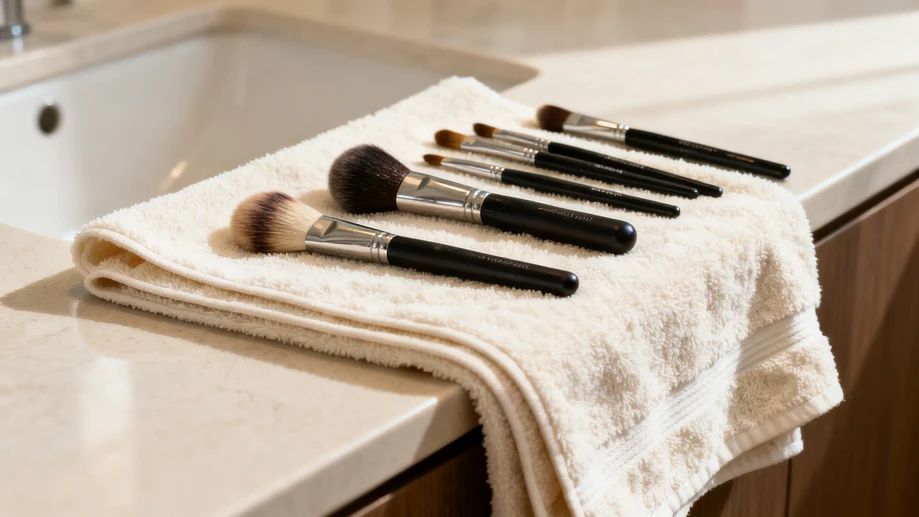
The correct, little known drying method takes barely any extra time at all, and it eliminates all of these negative side effects completely. All you need is a clean, lint-free cotton or microfiber towel laid flat on a dry, elevated surface such as the edge of a bathroom counter or the top of a dresser. After you finish rinsing your brushes, gently squeeze out excess water from the bristle tips with your fingers, never wringing or twisting the hair strands, then lay each brush horizontally on top of the towel with the bristle head hanging slightly over the edge of the fabric. This position lets all residual moisture that has not been absorbed by the towel drip slowly down away from the bristle roots and the adhesive base, running off the tip of the bristles into the open air instead of getting trapped inside the handle. You can fold the towel in half if you have a larger collection of brushes, and leave a small gap between each tool so air can circulate around all sides of the bristle head to speed up the evaporation process.
Most brushes of average size will dry completely within 6 to 8 hours in a well ventilated room, and none of the moisture will ever touch the adhesive base or the inside of the hollow handle. People who switch to this drying method immediately notice that their brushes stop shedding stray hairs mid-application after just two or three cleaning cycles, and the soft, rounded shape of the brush heads stays perfectly intact for years without any frizzy, frayed edges developing at all. Many casual beauty enthusiasts who previously replaced their core set of makeup brushes every single 12 to 18 months find that their tools stay in perfect usable condition for three full years or longer, cutting down unnecessary waste and saving a significant amount of money over time that they would have otherwise spent on replacements.
This small adjustment to your beauty routine also brings unexpected skincare benefits that many people do not anticipate for the first few weeks. Without trapped bacteria and mold growing in the wet base of improperly dried brushes, the amount of unidentifiable tiny irritants you apply directly to your facial skin every morning drops dramatically, leading to fewer random red bumps and less sensitive skin flare ups that could not be traced back to any specific skincare product. The dense, evenly shaped bristle heads also pick up and distribute powder and liquid products far more smoothly, so you end up using less foundation and less blended eyeshadow product to get the same full coverage effect, making the rest of your makeup supply last far longer as well. What looks like a meaningless tiny change to a regular chore ends up creating positive ripple effects across your entire daily beauty routine that are far more noticeable than most people would ever assume before they try it out for themselves.