
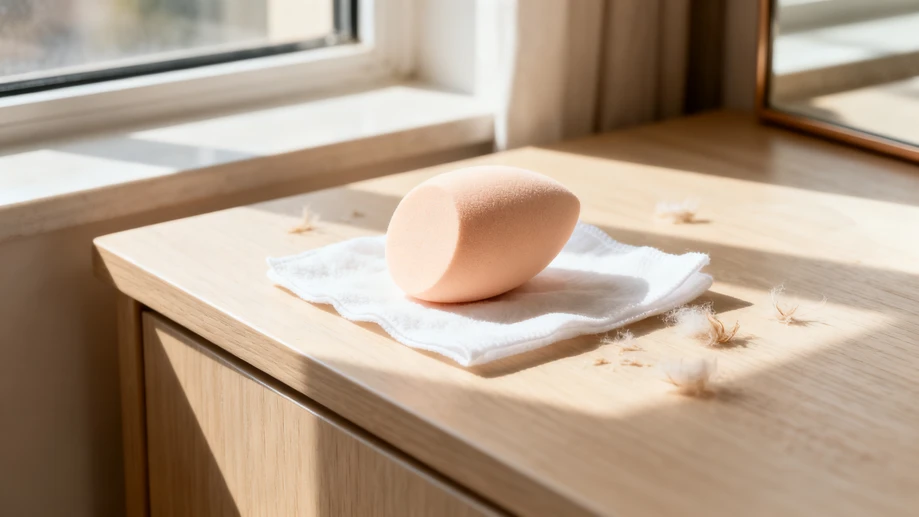
The hidden rule of controlling water content for a regular makeup sponge that helps your base makeup look far more seamless
Most of us squeeze and twist the sponge to get rid of extra water after washing, but this tiny wrong step leads to patchy base makeup and wastes a large amount of your daily liquid foundation
Nearly every person who wears base makeup regularly has at least one soft, porous makeup sponge in their cosmetic bag, and most people follow the same routine before they take it to their face: soak it under running tap water, then twist it as hard as they can to squeeze out every last drop of water that might drip off. A huge number of users even think that a nearly dry sponge works better for precise patting, and that excessive water will dilute their foundation and make the coverage turn too sheer to cover mild redness or blemishes. This widely accepted belief, however, is completely incorrect, and the small change of adjusting how you remove excess water from the sponge can completely upgrade your daily makeup experience without you buying any new cosmetic products.
The secret behind this tiny trick lies in the special porous structure that all makeup sponges are made to have. The entire body of the sponge is packed with thousands of tiny, evenly distributed flexible pores, designed to pick up just the right amount of liquid cosmetic and transfer it evenly onto the surface of your skin. When you twist and wring the sponge roughly, you permanently warp these soft pore structures, crush them into dense clumps, and break a large number of fine outer fibers. A wrung, deformed sponge can no longer hold cosmetic on its smooth outer layer, and it will suck nearly all the foundation you pick up deep into its collapsed inner pores, which is the very reason so many people complain that their makeup sponge “eats” too much of their expensive foundation.
There is no need for complicated professional testing to verify this effect, and you can try the comparison test on your own at home in less than 10 minutes. Take two identical new makeup sponges, soak both of them in room temperature clean water for 30 seconds, then wring one of them hard until no water drips off when you hold it in the air, and place the other one between two layers of clean dry tissue, press the whole surface of the tissue with the palm of your hand firmly until no wet mark can be seen left on the tissue. Use the first wrung sponge to pick up a single pea-sized amount of foundation, and you will notice that you need to dab the same area on your cheek more than 6 times to get a thin, even layer of base makeup, and you will easily see faint streaks left by the crushed pores on your skin. The second sponge, with its water content carefully removed by pressing, only needs half the amount of foundation, and two to three light pats are enough to lay down a full even layer of foundation that sits smoothly on every skin texture and fine line.
This small correct step also brings multiple unexpected benefits that most users have never noticed. Sponges that are pressed rather than wrung after cleaning have intact, fluffy pore structures that allow fresh air to flow through every tiny empty space inside the material. They will get completely dry in a well ventilated space around 20 to 24 hours, while a roughly wrung sponge usually traps leftover moisture deep in its compressed inner layers, and stays damp for more than three full days even in a dry room. Damp trapped moisture is the top cause of hidden bacteria growth that can lead to unexpected skin breakouts, so adjusting the way you squeeze the sponge will also extend its safe service life and reduce potential irritation to your facial skin.
You do not need any extra special tools or complicated steps to apply this trick to your daily makeup routine. The next time you prepare to do your base makeup, skip the twisting step, take the soaked sponge, wrap it with a clean disposable cotton pad or soft clean towel, press it gently but firmly all over its surface, and then you can start patting foundation on your skin. Most people who try this small change for the first time say that they immediately notice their base makeup feels far lighter, looks more naturally glowing, and stays smooth without caking for hours longer than their previous application. It is such a tiny, cost-free adjustment that you will wonder why you never thought of trying it after years of using makeup sponges.