
The Daily Ritual: Unlocking Your Skin's Natural Potential
How your environment and skincare choices work in silent partnership for healthier skin.
Step into any well-appointed bathroom, and you'll likely find an array of vessels lining the counter or tucked neatly into a cabinet. These aren't mere decorations; they're the tools of a daily ritual, carefully selected potions designed to interact not just with your skin, but subtly with the very air and light around them. The efficacy of a cleanser, the stability of a serum, even the texture of a moisturizer, are all quietly influenced by their surroundings. Understanding this interplay transforms routine application into a mindful act of harmonizing your personal care with the spaces you inhabit.
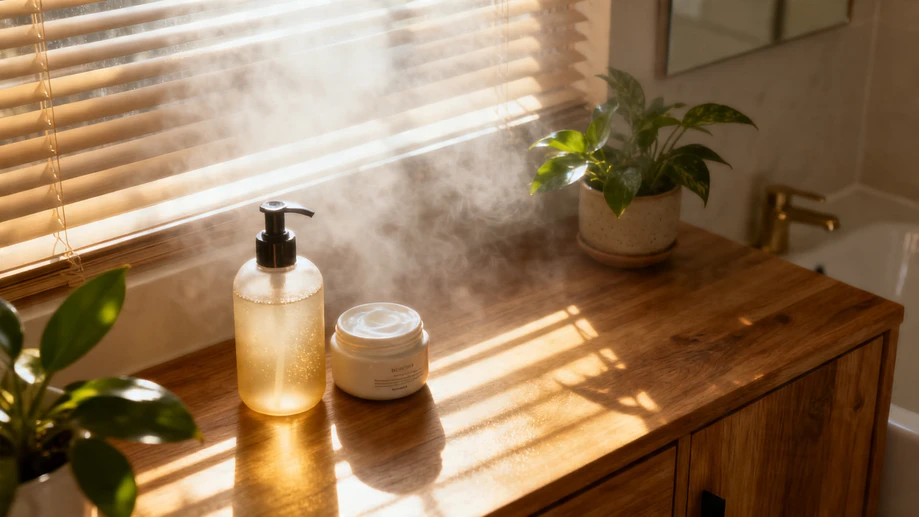
Consider the humble cleanser, often residing near the sink. Its placement isn't just about convenience. The slightly higher humidity typical of a bathroom environment aids in preventing certain gel-based formulas from drying out or altering texture prematurely in their containers. When dispensed onto damp skin under the gentle glow of bathroom lighting – often softer and more diffused than harsh overhead lights – the product spreads effortlessly, allowing its surfactants to efficiently lift impurities without the harsh friction that dry skin or bright, glaring light might encourage. This simple environmental synergy makes the cleansing process both gentler and more effective.
Moving beyond cleansing, daytime protection takes center stage. Sunscreens and antioxidant serums, frequently kept on a bedroom dresser or near a window, face a different environmental dialogue. Exposure to direct, strong sunlight streaming through windows can degrade sensitive active ingredients like Vitamin C or certain chemical UV filters over time. This is why opaque, airtight packaging and thoughtful storage away from intense light and heat sources are crucial. Applying a broad-spectrum SPF moisturizer near natural light, however, offers a practical advantage: it ensures even coverage, especially along the jawline and neck, areas easily missed in dimmer conditions. The product forms a literal shield, interacting with the ambient UV radiation to deflect it, protecting the skin cells beneath.
As daylight fades, the focus shifts to repair. Night creams and targeted treatments, often richer in texture, benefit from the typically cooler, more stable temperatures of a bedroom environment compared to a fluctuating bathroom. Placed on a nightstand or within a drawer, away from steam and heat, their active ingredients – retinoids, peptides, nourishing oils – remain potent. The calm, dim atmosphere of the evening also encourages a slower, more deliberate application. The thicker emulsions melt upon contact with skin warmed by body heat, facilitating deeper penetration without feeling heavy or greasy, perfectly suited to the skin's natural nocturnal renewal cycle happening in the quiet dark.
Choosing and placing skincare isn't just about vanity; it's a subtle science of environmental adaptation. Glass bottles might look elegant on a sunny windowsill, but they offer little protection for light-sensitive contents. Pump dispensers and airless tubes, while perhaps less photogenic, excel at preserving delicate formulas in humid bathrooms or dry bedroom air. The size of the container should suit its frequency of use and location – a large jar of body cream fits well on a spacious shower ledge, while a precious few drops of concentrated facial oil belong in a smaller bottle safe on a stable, dry surface. This mindful curation ensures each product performs its intended function optimally within its designated space.