
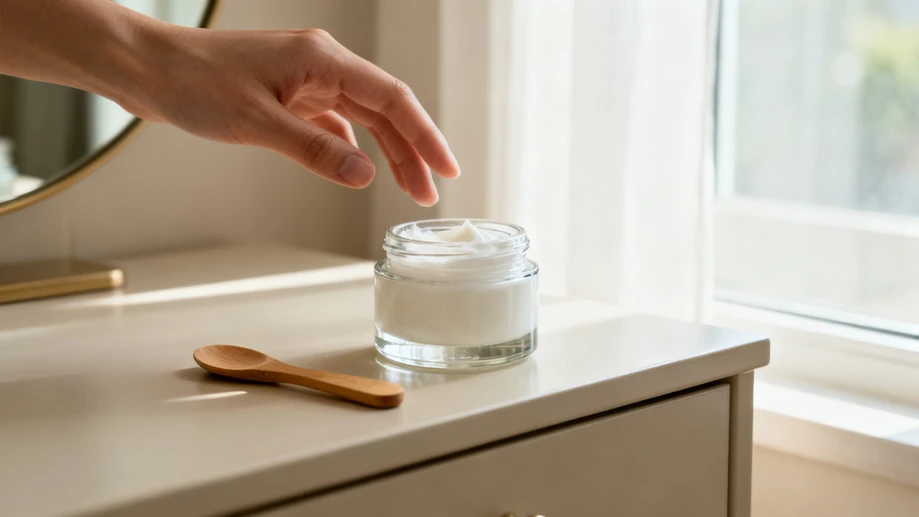
Developing a tiny regular habit of using dedicated clean scoops for jarred face cream prevents unnoticed fast product degradation before printed expiry
Most casual skincare users do not realize that repeated dipping of unwashed fingers into open cream jars can introduce excess oil and bacteria that break down preservative formulas far faster than official guidance suggests
Almost every person who keeps a jarred face cream on their bathroom counter has fallen into this easy habit, especially during rushed morning skincare routines. You finish washing your face, pat your skin dry, reach straight for the open cream jar, scoop a pea to cherry sized amount of product with your fingertip, and spread it across your face without a second thought. It feels perfectly clean, after all you just rinsed your hands under running water for several seconds, so there is no logical reason to think this small, seemingly harmless move would ruin the entire expensive skincare product you spent weeks researching and saving up to buy. The vast majority of people never even stop to consider this step as a potential flaw in their whole skincare routine, writing off any subsequent skin irritation or lack of visible effect as a sign the product is not a good match for their unique skin type.
The science behind this tiny overlooked mistake is far simpler than most cosmetic industry marketing content will ever explain. The preservative system formulated into every jarred skincare product is carefully calibrated to resist a fixed, limited amount of external microbial intrusion after the sealed container is first broken open. Even if you scrub your hands thoroughly with soap before touching the cream, the naturally resident bacteria and light layer of sebum oil that covers every human fingertip can never be fully removed with basic hand washing, and every time you dip that finger back into the sealed matrix of concentrated active ingredients, you deposit a small new batch of these foreign elements directly into the product. These small deposits do not cause obvious mold growth or discoloration right away, but they slowly eat through the reserve of preservatives that were designed to last for 6 to 12 months of normal, carefully controlled use after opening.
Most users will never notice the gradual breakdown happening inside their cream jar until it is already far too late to save the remaining product. The first sign of the preservative system failing is usually a subtle change in texture, where the smooth thick cream turns slightly runny or develops tiny grainy clumps that most people will write off as a normal quirk of the product formula. Long before you see visible discoloration, sour scent, or fuzzy mold growing on the top layer of the cream, the active ingredients such as anti-oxidant compounds, peptide complexes, and hyaluronic acid molecules have already been broken down and consumed by the growing colonies of bacteria that you introduced via repeated finger dipping. Many people who complain about high end face creams giving them random breakouts or no visible anti-aging effect months into use are not reacting to the product itself — they are reacting to the hidden microbial waste products building up inside the jar that get absorbed into their pores every time they apply the product.
Fixing this entire hidden problem does not require buying any fancy expensive skincare accessory or overhauling your entire daily routine, and it only adds two extra seconds to the whole process of applying your face cream. All you need to do is keep a small, clean scoop, a new unused cotton swab, or even a perfectly sanitized tiny plastic spatula next to your cream jar, and use that tool every single time to take out the exact amount of product you need for that application. You do not even need to wash the scoop after every use, as long as you keep it on a clean dry surface away from splashing water from the sink, and wipe it off with a small piece of clean tissue once every three or four days to remove any residual cream build up on its surface. This single tiny adjustment will keep all the foreign bacteria and sebum from your fingers from ever being introduced into the product at all, so the preservative system can work exactly as it was designed by the formulation chemists who made the product.
Pairing this small habit with a handful of other low effort adjustments will help you extend the usable lifetime of your jarred face cream by at least 30 percent, meaning you get every single cent of value out of every drop of product you paid for. Try to smooth the top surface of the cream inside the jar with your scoop after every use instead of leaving deep uneven pits that trap extra air against the product, and never store open cream jars in the humid steamy environment of your bathroom where hot water vapor can seep into the container every time you turn on the shower. Keep the jar on a dry shaded section of your bedroom dressing table away from direct sunlight, and screw the lid all the way tight immediately after you take out the amount of product you need. These combined tiny steps will keep your cream stable, fully effective, and safe to use all the way through the entire labeled post-opening shelf life, without any unexpected breakouts, wasted product, or disappointment over lost skincare effects.