
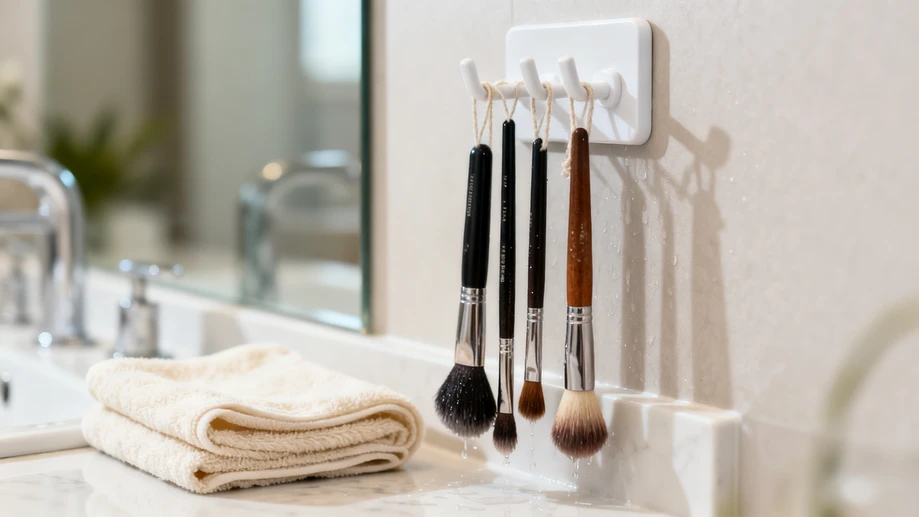
Why hanging recently washed makeup brushes upside down to dry preserves their performance far longer than other methods
This underrated simple routine stops water from seeping into brush ferrule glue that breaks down over time and ruins the soft shape of delicate bristle clusters for months of extended use
Most casual makeup users and even long-time beauty enthusiasts never think twice about how they treat their brushes right after a deep clean. The vast majority of people will rinse their brushes with gentle shampoo or dedicated cleanser, squeeze out excess water quickly, and then lay them flat on the edge of a bathroom counter or a random towel nearby to dry over the next few hours. Very few people stop to ask if this drying method is actually doing any hidden, long-term damage that does not show up after just one or two washes. Many people complain that their new brushes start shedding bristles within a few months, the ferrule loosens and wiggles when they apply pressure on their face, or the once-soft bristle clump goes frizzy and uneven after just a handful of uses, and they almost always blame these issues on low-quality manufacturing or bad product materials, ignoring that their own drying habit is the main culprit behind these annoying problems.
To understand why the flat drying method is so harmful, you have to look at the basic structure of every standard makeup brush. Each brush is made of three core parts: the bristle cluster, the metal ferrule that holds the bristles in place, and the solid handle, which connects to the ferrule with a strong but not completely waterproof adhesive. When you lay a wet brush flat to dry, gravity pulls the leftover water trapped in the bristles down toward the connection point between the bristle roots, the ferrule, and the top of the handle. This water pools in the tiny gap that exists between the three parts, and it will sit there for several hours as the rest of the outer bristles dry out first. Over time, the accumulated water will slowly dissolve the adhesive that holds the ferrule and handle together, and it will also break down the natural oils in animal hair bristles, leading to bristle breakage, bristle loss, and mold growth that you cannot see beneath the top layer of the bristle cluster.
Small independent beauty care tests that track brush performance over 20 consecutive cleaning cycles have shown a very clear gap between brushes dried upside down and those dried laid flat. The test groups used identical sets of eyeshadow brushes of the same material and size, with one half hung upside down to dry and the other half placed flat on a cotton towel after each wash. By the 20th wash, 60 percent of the flat-dried brushes showed visible signs of wear: the bristle roots turned stiff and yellow, the number of stray bristles that shed during normal makeup application tripled compared to their brand new state, and 20 percent of the ferrules could be pulled off the handle with very little force. The brushes that were hung upside down to dry through all 20 cycles, by contrast, retained 98 percent of their original bristle softness, did not develop any stray shedding issues, and had zero cases of loose ferrules.
You do not need to buy any special, expensive brush drying racks to get all the benefits of this correct drying method. All you need is a small adhesive hook that you can stick to the underside of a bathroom shelf, the back of a bathroom door, or the edge of a wardrobe shelf. After you finish washing your brushes, never squeeze out extra water by swinging or flinging the brush through the air, because this violent motion will pull the bristle roots loose from the ferrule and cause shedding long term. Instead, gently press the wet bristle cluster between layers of clean cotton tissue to soak up all excess dripping water, reshape the bristles back to their original rounded or pointed shape, then loop the brush handles through a loose rubber band and hang the whole set on the hook, so every bristle points straight down and dangles in the open air without touching any other surface. Leave the brushes in a cool, well-ventilated space away from direct harsh sunlight, which will make both natural and synthetic bristles turn brittle and rough.
Most people who switch to this upside down drying routine report that their brushes last two to three times longer than they used to, even if they are relatively affordable entry-level makeup tools. This simple change also cuts down total drying time by nearly 40 percent, because there is no trapped moisture stuck in the bristle roots that takes extra hours to evaporate. You will also never run into the unpleasant situation where the outer layers of bristles feel completely dry, but the inner root section still carries a faint damp, mildew smell that can transfer to your makeup products and even cause unexpected breakouts or mild skin irritation on sensitive facial areas. The tiny, 30-second extra step of hanging your brushes up to dry instead of tossing them on the counter does not take any extra effort, but it saves you a huge amount of money over the years by removing the need to replace your favorite makeup brushes far before they have reached the end of their usable life.