
Most casual makeup enthusiasts never realize their beloved powder brushes can last twice as long as expected if they dry the proper way after every washing session
This tiny overlooked daily care habit stops water from seeping into the glue that holds bristles to the brush handle, prevents fraying, and keeps every bristle cluster perfectly shaped for weeks longer than most people anticipate
Walk up to any random person who owns a basic set of makeup brushes and ask how they dry their tools after washing, and nine out of ten will say they stand them upright in an empty cup, bristles facing up, so the leftover water drips down toward the bottom of the cup without making a mess. This practice feels completely logical at first glance, it keeps the damp brushes from touching other surfaces that might get them dirty, it keeps your countertop free of wet spots, and it feels like the most low-effort way to deal with freshly cleaned tools. Almost no one stops to think that this tiny, seemingly harmless routine is quietly damaging their makeup brushes from the very first time they do it, slowly shortening the usable lifespan of a tool that many people spend a good amount of their disposable income to purchase. Most people only notice the damage months down the line, when their once perfectly fluffy powder brush starts shedding bristles all over their face mid-foundation application, or the tight, pointed tip of their precision concealer brush puffs out into an unruly fuzzy ball that cannot draw a sharp line no matter how careful they are.
The root of this hidden damage sits right at the connection point between the soft bristles and the solid brush handle, a small section most users never even look at when they are cleaning their tools. The vast majority of commercially produced makeup brushes use a water-soluble adhesive to hold thousands of individual bristles locked in place inside the hollow opening at the top of the handle, and most manufacturers do not fully seal this gap against long term exposure to standing water. When you stand a wet brush upright with the bristles facing upward, all the excess water you did not squeeze out of the bristle fibers will slowly drift down along the length of the bristles and pool directly against that adhesive seam, sitting there for hours as the brush dries in still air. Over repeated washes, that pooled water will slowly soften the adhesive, working its way deep into the bond that holds the bristle cluster in place, until one day the entire group of bristles will slip right out of the handle the second you apply light pressure against your skin. For brushes with wooden or bamboo handles, that trapped water will also seep into the porous material, causing the handle to swell, crack, or peel away its outer finish until it looks worn and shabby long before the bristles have reached the end of their usable life.
Many people who learn about this issue immediately jump to the next logical solution, grabbing a hook or a specialized brush stand that lets them hang their freshly washed brushes upside down from the handle, with the bristles pointing straight toward the ground. This setup does solve the problem of water pooling at the adhesive seam, but it creates a whole new set of issues that most people do not notice until months of regular use have already ruined their brush heads. When you hang a soft bristle cluster upside down for hours at a time, the entire weight of the damp, heavy bristles pulls downward away from the handle, creating a constant tension that slowly stretches the fine bristle fibers out of their original carefully trimmed shape. The tapered pointed tip of a small eyeshadow brush will slowly flatten and fray, the dense rounded top of a foundation brush will stretch out into a lopsided uneven shape, and even the soft fluffy fibers of a large powder brush will lose their natural spring, turning limp and unable to pick up and deposit pigment evenly across the skin. This is the exact reason why so many people complain that their high-end expensive brushes turn low quality after only a handful of washes, when almost all of that damage is entirely self inflicted by incorrect drying methods.
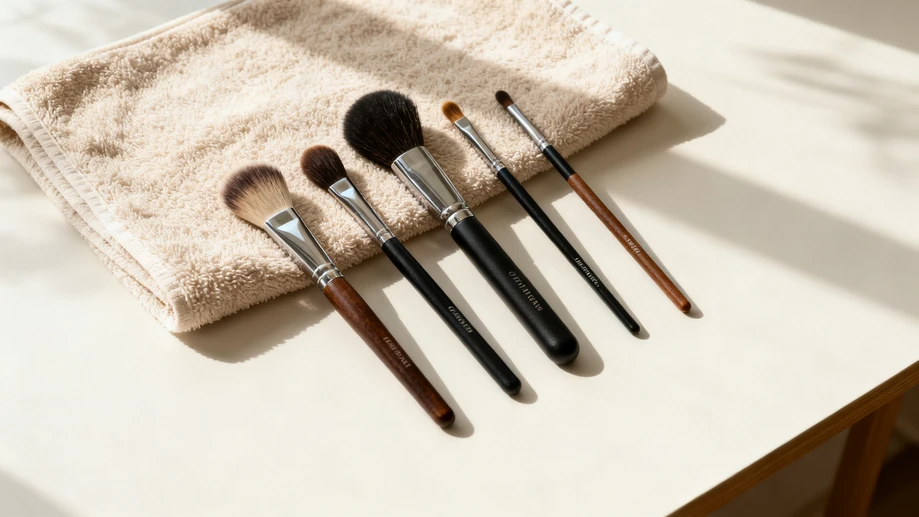
The only low-cost, zero-fuss drying method that avoids all of these different problems is to lay your freshly washed brushes flat on the surface of a clean, lint-free cotton towel, far away from direct sunlight and open windows that blow dust around. All you need to do after you gently squeeze excess water out of the bristles with the corner of the towel is arrange the brushes in a single even layer, making sure none of the bristle clusters hang off the edge of the towel or get squished under any other heavy object. The towel will absorb all the extra moisture that seeps out of the bristles over the next few hours, the small amount of leftover water that does make its way toward the base of the bristle cluster will never pool in a thick enough volume to damage the adhesive, and there is no downward tension pulling the bristles out of their carefully shaped form. You do not need to buy any specialized, overpriced brush drying racks, fancy silicone holders, or other accessories that get advertised to beauty fans, almost every household already has at least one old soft cotton towel lying around that works perfectly for this exact purpose.
Even better, this tiny one second change to your post-wash routine will not add any extra work to your existing beauty care schedule, it only asks you to move the brushes from the empty cup you were going to set them in over to the flat surface of the waiting towel. Most brushes will fully dry in between six and eight hours in a well-ventilated room, leaving them completely fresh, free of residual soap, and holding their original shape perfectly until the next time you use them. Over the course of a few years, this simple small habit can extend the lifespan of all your makeup brushes by two to three times, saving you the cost of replacing damaged brushes every few months, and ensuring that every makeup application you do goes smoothly, with no stray hairs falling onto your face, no patchy pigment deposits, and no fussy misshapen brush heads that refuse to blend product the way you want them to. It is the kind of tiny, almost invisible beauty hack that makes a surprisingly large difference to your daily routine, with zero extra cost and almost zero effort required.