
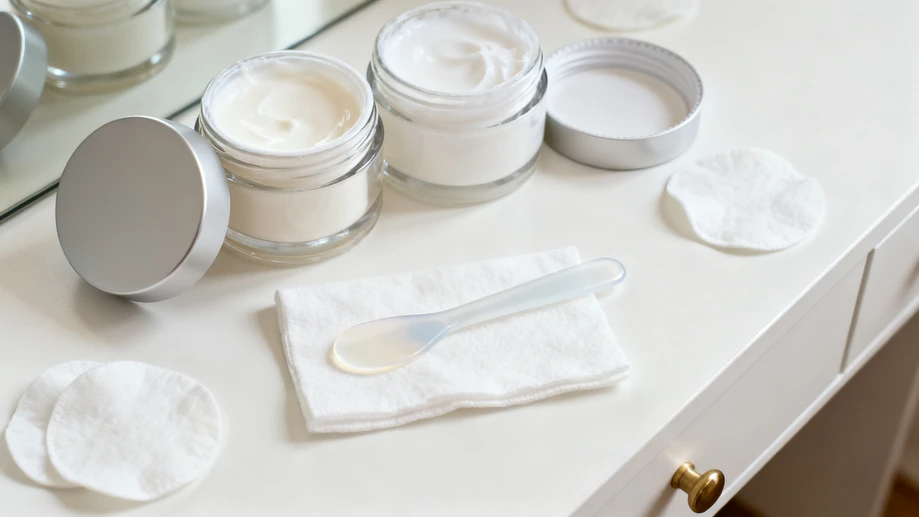
The little-understood daily habit of dipping clean fingers into cream jars that drastically shortens product shelf life
Most people do not realize that even fully washed fingers carry invisible microorganisms and trace skin oils that break down active skincare ingredients far faster than official product labels suggest.
The vast majority of people who use jarred facial moisturizer, face mask or treatment balm follow the same unexamined routine every morning and night. They wash their hands carefully with soap or hand wash, dry them on a clean towel, lift the lid of their cream jar, dip two fingers in to scoop up the amount they need, and smooth the product onto their skin. It feels completely hygienic and logical at first glance, and most people never think twice about whether this routine could be doing unexpected damage to the product they spent good money on. Many beauty lovers have shared anecdotes online about their cream developing a faint sour smell after just three months of use, or growing tiny discolored specks scattered across the surface, even though the printed label states it should stay good for six months after opening. Most of these users assume they got a faulty product, or that they stored it incorrectly near a window that got too much sunlight, and they never trace the issue back to their own simple, seemingly harmless habit of using their fingers to get product out of the jar.
The science behind this hidden issue has nothing to do with poor hand washing, and everything to do with the natural biology of human skin. Even after you scrub your hands with the strongest cleanser you own, the sebaceous glands on your fingertips will continue excreting trace amounts of sebum within seconds of rinsing off the soap, and the harmless commensal bacteria that live on the surface of your skin will still be present in small, completely normal quantities. When you dip those fingers directly into the dense, nutrient-rich formula of a closed cream jar, you leave behind tiny traces of that sebum and those bacteria that you cannot see with the naked eye. Over the course of weeks and months, those trace deposits build up inside the product. The bacteria feed on the lipid-rich emollients in the cream, and their metabolic byproducts trigger slow chemical reactions that break down fragile active ingredients, from brightening vitamin C molecules to soothing centella asiatica extracts, turning them into inert, useless compounds that deliver none of the skincare benefits you paid for. In most cases, the concentrations of these bacteria are not high enough to cause skin irritation or infection, but they are more than high enough to turn a high-performance skincare product into nothing more than a basic, hydrating petroleum balm long before its labeled post-opening expiration date.
Many people who learn this tip immediately go out and buy small plastic or silicone spatulas to use in their cream jars, assuming this will fully solve the problem, but this common workaround comes with its own set of hidden risks. A large number of people leave their spatulas sitting right next to their cream jar on the vanity, fully exposed to floating dust, lint and tiny skin cells that drift through the air in every home. Every time they reach for that spatula to scoop out product, they are dragging those accumulated airborne particles directly into the sealed cream, introducing even more contaminants than they would have left behind with their clean fingers. Even worse, many users fail to wipe the spatula off between uses, leaving a thin layer of old cream on the surface of the tool that dries out and oxidizes over time. Every time that residue mixes in with the fresh cream inside the jar, it triggers local oxidation that breaks down surrounding active ingredients far faster than the even, gradual breakdown caused by hand contact alone. This means that a lot of people who think they are taking perfect care of their expensive cream are actually making it go bad even faster than they were before.
The actual tiny, easy to follow set of adjustments that can double or even triple the usable life of your jarred skincare products take less than five extra seconds every time you use them. You do not need special tools, fancy sterilization products or complicated routines to get the full labeled shelf life out of every product you buy. All you need to do is keep a stack of plain, lint-free cotton pads next to your skincare routine area, and wipe your spatula completely clean with one of those pads every single time before you dip it into the product. If you accidentally scoop out a little more cream than you need for one application, never scrape the excess back into the jar no matter how expensive the product is, as that thin layer of product that has been exposed to open air and the surface of your skin will introduce far more contaminants than it is worth to save. After every use, gently smooth the top surface of the remaining cream inside the jar with the flat edge of your cleaned spatula to push out any tiny air pockets that have formed below the surface, before you fasten the lid back on as tightly as you can. This simple step removes most of the oxygen that would otherwise trigger oxidation of active ingredients, slowing down that destructive process drastically.
This little piece of skincare knowledge is almost never shared directly by cosmetics manufacturers, for the simple reason that brands profit more when their customers go through products faster and return to buy new replacements sooner. Too many people waste hundreds of dollars every year tossing out half-full jars of product that they think stopped working because the formula was low quality, when the real issue was just a tiny, unnoticeable habit they had never been told to adjust. Making these small changes to your daily product routine will not just save you money, it will also make sure you are getting every single promised benefit out of every drop of the skincare products you choose to invest in.