
The Skin Dialogues
When Environment Meets Epidermis in Daily Rituals
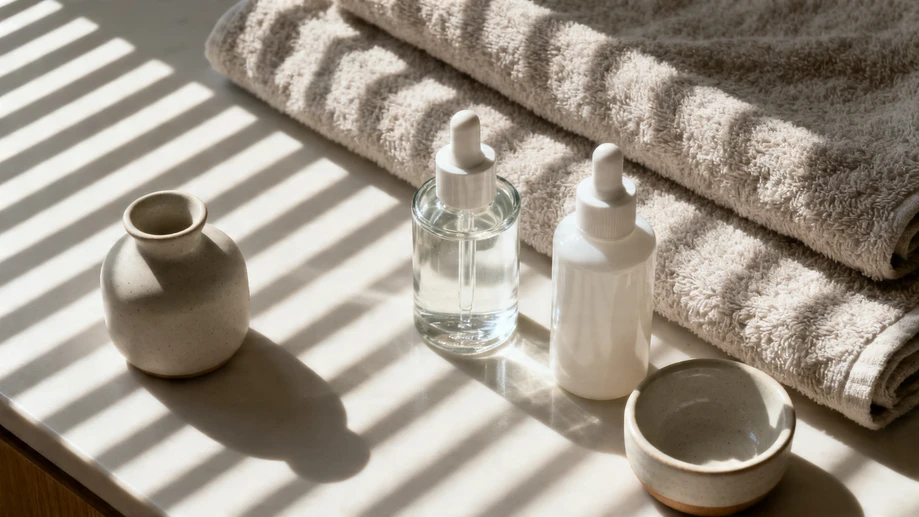
Morning sunlight filters through plantation shutters, casting linear patterns across a minimalist vanity. Glass vessels of varying heights stand sentinel beside a shallow ceramic dish holding cotton rounds. The amber-toned serum bottle catches fractured light beams, its viscosity visible through transparent walls. This microcosm exemplifies spatial harmony - functional objects arranged within breathing room, balancing aesthetics with accessibility. Each product occupies intentional territory: cleansers nearest the sink edge, night treatments positioned slightly farther back. This orchestrated placement creates intuitive workflow pathways while preserving visual calmness, demonstrating how effective skincare integrates with domestic architecture without dominating it.
Seasonal shifts dictate subtle rearrangements within these personal sanctuaries. Summer's humidity sees gel-based moisturizers migrate toward the vanity forefront, their lightweight textures suited for dewy mornings. Come winter, richer creams housed in opaque jars rotate into prime positions, countering dry indoor air from heating systems. The spatial choreography remains constant - taller items flanking smaller companions, preventing visual clutter. This environmental adaptation extends beyond formulations; ultraviolet meters might rest beside window sills, monitoring light intensity that dictates reapplying mineral sunscreens. Such spatial logic transforms skincare from isolated act to environmental conversation where formulations respond to atmospheric cues.
Product vessels communicate through material language within these curated spaces. Frosted glass jars suggest clinical precision for potent retinoids, while unglazed terracotta containers housing clay masks exude earthy tactility. These material choices resonate subliminally with their contents’ functions, creating spatial coherence. The physics of application tools further enhances environmental synergy: dense silicone brushes for exfoliation require minimal counter clearance, while wide-mouth jars accommodate spatulas that preserve ingredient stability. Such nuanced design considerations prevent spill catastrophes and maintain product integrity through measured interactions between object, user, and domestic ecology.
Beyond bathrooms, skincare products harmonize with diverse environments through intelligent formulation science. Hand creams transition smoothly from office desks to gym bags, their non-greasy finishes preventing keyboard smudges. Travel-sized serums nestle within airplane cabinetry, their airtight seals countering low-pressure environments. Modern actives work symbiotically with surroundings: antioxidants shield against urban pollutants, hyaluronic acid adapts to humidity fluctuations, and ceramides reinforce barrier functions against harsh winds. This scientific alchemy transforms domestic spaces into bioactive environments where products don't merely occupy surfaces but actively engage with atmospheric conditions.
Ingredient integrity flourishes when storage principles align with spatial realities. Dark, cool spaces like linen closets preserve vitamin C serums from photodegradation, while steam-free medicine cabinets protect water-soluble formulas. Conversely, temperature-stable oils may grace open shelves, their ornamental bottles contributing to décor aesthetics. This spatial intelligence manifests in labeling innovations: UV-reactive indicators on packaging reveal temperature excursions, while minimalist typography eliminates visual noise. Ultimately, the conversation between skincare and environment culminates in products that serve both biological needs and spatial harmony, dissolving the boundary between wellness ritual and living habitat.