
Many casual everyday makeup lovers have been ruining their makeup sponges for years by making one rarely mentioned common mistake
This small overlooked habit not only shortens the service life of your soft makeup sponge by more than half but also creates hidden breeding ground for harmful bacteria that irritate facial skin
Walk past any vanity where regular makeup is applied, and you are almost guaranteed to see the same routine: a person runs their makeup sponge under running tap water, scrunches the soft foam up into a tight ball, and twists it hard between both palms just like squeezing excess water out of a small towel. Almost every beauty tutorial online shows this exact step without a second thought, and most people have never stopped to question whether this twisting, wringing motion is actually good for the tiny, porous foam tool they rely on for a seamless foundation finish. The vast majority of makeup users do not realize that this tiny, almost automatic movement is quietly doing far more harm than good, even when they think they are doing the right thing by removing extra water that would make their foundation slide off mid-day.
The secret lies in the specific material structure that makes modern makeup sponges so soft and elastic. Almost all quality makeup sponges sold on the market are made from open-cell hydrophilic polyurethane foam, a special material crafted with thousands of interconnected, ultra-fine mesh pores that expand evenly when they come into contact with water. When you twist and wring the damp sponge hard, the uneven shear force you apply stretches and snaps the thin, delicate pore walls inside the foam that are not visible to the naked eye. Over just two or three weeks of repeated wringing, most of these internal pore structures will collapse permanently, turning the once bouncy, soft sponge into a lumpy, stiff piece of foam that soaks up far more foundation than it spreads onto your skin. This is the exact reason why so many people complain that their makeup sponges eat up half a bottle of foundation within a few weeks, and no amount of cleaning seems to bring back the original soft, bouncy texture they felt when they first bought it.
Worse still, the broken, crumpled pore structures left behind after repeated wringing create tiny, sealed pockets that trap small amounts of residual water that cannot escape to the surface of the sponge to evaporate. Even if you set the twisted sponge out on your bathroom counter to dry overnight, these hidden pockets of stagnant water will stay sealed inside the foam, creating a dark, damp, airless environment that is perfect for mold, yeast and other harmful bacteria to multiply at an extremely fast speed. Multiple independent beauty hygiene tests have found that a regularly wrung makeup sponge left in a typical bathroom environment can grow more than 2 million colony forming units of bacteria within 48 hours of being used, far exceeding the safety threshold for items that come into direct contact with clean facial skin. Using this contaminated sponge to apply foundation without knowing the hidden bacterial growth will lead to random unexplained breakouts, small red rashes around the cheek and jawline, and even mild eye irritation if you use the same sponge to blend concealer near the eye area.
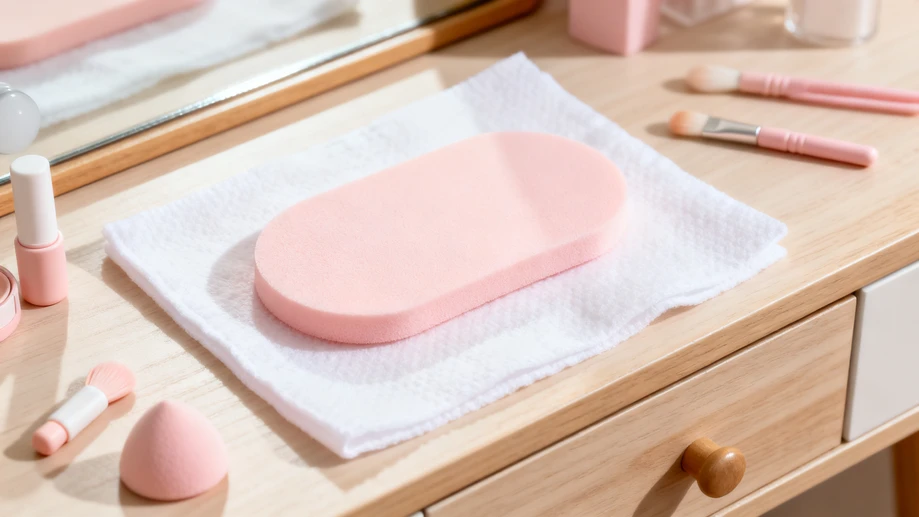
The correct, little-known method to deal with a damp makeup sponge could not be simpler, and it will fix all of the issues caused by hard wringing with zero extra effort. Instead of twisting the foam between your palms after rinsing it, lay the fully expanded damp sponge on top of a clean, dry, highly absorbent cotton towel or disposable cotton pad, then fold the fabric over the top of the sponge and apply even, gentle pressure with the flat of your palm to squeeze excess water out. Keep pressing and shifting the position of the sponge every few seconds until there is no more dripping water coming out of the foam. This even, flat pressure does not twist or break any of the delicate internal pore walls, so the full structure of the sponge stays bouncy and evenly expanded, no hidden stagnant water pockets are formed, and all extra free water can be absorbed completely by the towel.
You can use this exact same pressing method after you deep clean your makeup sponge at the end of each week, too, instead of wringing it to speed up drying. Sponges treated this way will keep their original soft, bouncy texture for at least three to four months, which is more than double the usable lifespan of a sponge that is wrung hard after every use. The even, unbroken pore structure will also hold far less foundation product while you blend, so you can use less foundation for a fully even, seamless finish that never looks patchy or streaky. You will also notice far fewer random breakouts related to your makeup tools, since there are no hidden stagnant water pockets for bacteria to grow in between uses.