
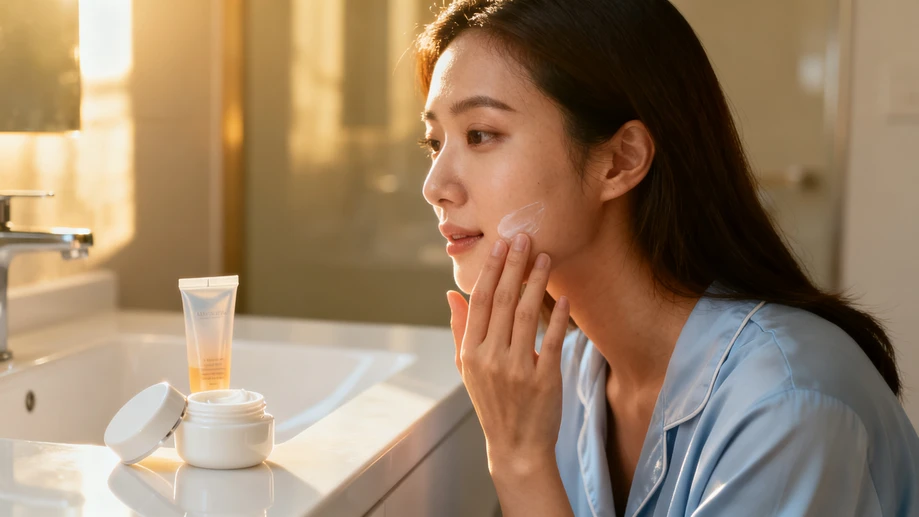
A Simple 30-Second Pause After Applying Daily Face Moisturizer Before Layering Sunscreen Eliminates Almost All Unwanted Pilling
Most people blame incompatible product formulas or wrong application moves for frequent face product pilling while this tiny easy-to-miss waiting step delivers far better anti-pilling result completely for free
Talk to any regular skincare user and you will hear at least one complaining story about annoying pilling that ruins their entire morning grooming routine. Many people have spent dozens of hours browsing beauty forums and shopping platforms to collect so-called pilling-resistant product lists, switched three to five different sunscreen formulas in half a year, or even adjusted their applying technique from rubbing hard to patting gently, only to find the white flaky residues still pop up under their fingers when they spread the second layer of product on face. They may never realize that the solution they have been searching for years is not hidden in some high-end new formula, but hidden in a tiny free step they never thought to add into their existing routine.
The logic behind this tiny 30-second pause is far easier to understand than most complicated skincare ingredient theories. The average moisturizer product carries a large amount of humectants, emollients and mild film-forming agents, and when you first spread a full layer of moisturizer on clean face, nearly 60 percent of those active ingredients are still sitting on the very top of the skin surface instead of penetrating into the shallow layers of the stratum corneum. If you apply sunscreen immediately at this moment, the physical UV filters like zinc oxide or titanium dioxide, paired with the film-forming agents in sunscreen formulas, will mix with the half-dried unabsorbed moisturizer residues on skin surface, and the friction from your fingers will break those two incomplete soft films into tiny white crumbs, which we call pilling in common beauty language.
You do not need to spend a single extra second out of your tight morning schedule to make this small step work for you. Most people who rush through their morning routine usually have dozens of tiny tasks to finish between washing face and walking out of the door, from picking out their earrings, adjusting their messy bedhead hair, filling their reusable water bottle, to checking the content of their work bag, and all those casual little actions can exactly cover the 30-second waiting period. You do not have to stand still and stare at the mirror for 30 seconds, which feels like a total waste of time, you just need to make sure that your face no longer feels sticky to the touch before you reach for your sunscreen tube, and that tiny shift of sequence will bring you unexpected huge difference in your subsequent makeup and skincare performance.
This waiting step is not a fixed rigid rule that applies to all skin types without any adjustment. People with extremely dry skin who usually use thick butter-textured moisturizers can extend the waiting period to 45 seconds for the cheek area with dry flaky patches, so that all the rich nourishing ingredients can fully sink into the dry skin and leave no excess sticky layer on the surface. People with oily skin who prefer light gel-form moisturizers only need to wait 10 to 15 seconds at most before applying sunscreen, as most of the water-based formula will get absorbed by the sebum-filled stratum corneum in a very short time. For people with combination skin, they can even wait separately for different areas, so that the cheek area with drier texture gets 30 seconds to absorb the moisturizer while the T-zone area only needs 10 seconds before layering the next product.
Apart from eliminating 90 percent of common pilling issues, this simple 30-second pause can also bring plenty of unexpected extra benefits for your daily skincare results. When the moisturizer layer has fully sunk into your skin before you apply the next layer of sunscreen, the UV protection agents can attach evenly to your smooth dry skin surface much better than to a slippery sticky moisturizer layer, which means the actual SPF performance of your sunscreen can be improved by 20 to 30 percent compared to the situation where you apply two products back to back. You will also no longer see those annoying white streaks running down your neck when you sweat a little on the way to work, and your subsequent base makeup will sit on the skin much more evenly without gathering into fine lines around your eyes or mouth.