
The Skin-Scape Symphony: How Products Harmonize With Your Habitat
Discovering the invisible choreography between skincare essentials and living spaces
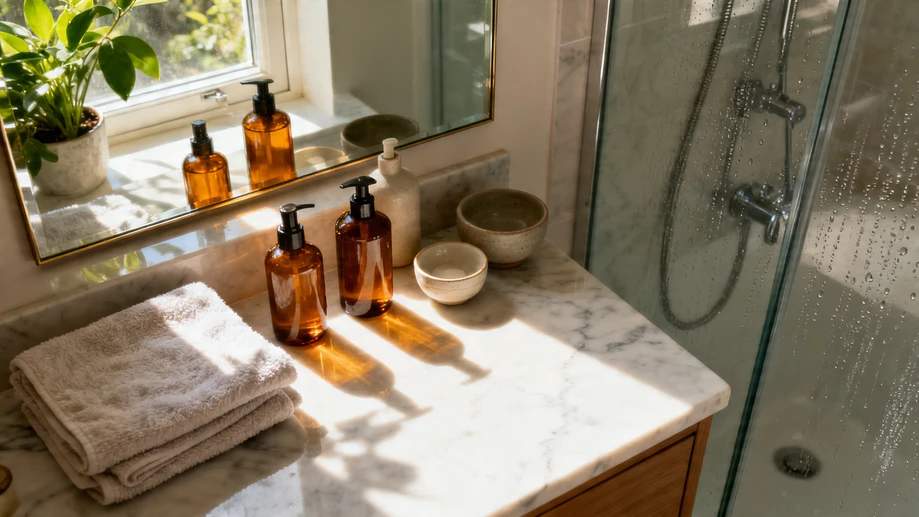
Morning light filters through bathroom windows, illuminating rows of amber glass bottles standing like sentinels on quartz countertops. This daily ritual exists at the intersection of chemistry and environment, where humidity levels dictate product viscosity and sunlight exposure informs packaging choices. Modern skincare formulations are engineered to maintain integrity precisely because ceramic tiles retain coolness while linen cabinets absorb excess moisture. The symbiotic relationship begins before any product touches skin - silica gel packets nestle within drawers to prevent oxidation, and opaque containers stand guard against UV degradation on vanity tables positioned away from windows. These silent interactions form the foundation of effective skincare, where environmental awareness is as crucial as ingredient knowledge.
Consider the journey of a hyaluronic acid serum through different domestic zones. In steam-filled bathrooms immediately post-shower, its water-binding properties amplify effectiveness when humidity exceeds 60%. Yet that same formula migrates to climate-controlled bedrooms where air conditioning reduces moisture, necessitating prompt application before dehydration occurs. Spatial awareness extends to storage solutions: pump bottles triumph over jars in powder rooms where frequent handwashing increases bacterial exposure, while vacuum-sealed containers prove indispensable near beachside windows where salt air accelerates ingredient breakdown. Such environmental intelligence transforms ordinary routines into precision performances, with each product selected not just for skin type, but for its compatibility with surrounding elements like temperature gradients and airborne particulates.
The dance intensifies as products encounter external elements. On oak dressing tables, antioxidant-rich vitamin C serums in UV-protective violet glass stand ready to combat urban pollution particles smaller than pores. Meanwhile, mineral sunscreens with zinc oxide form crystalline shields on bookshelves away from radiators, their efficacy preserved until needed against midday glare. Packaging evolves as environmental co-conspirator: airless dispensers prevent oxidation in oxygen-rich kitchens, while frosted glass jars protect light-sensitive retinol near bedroom windows. Even textiles participate in this choreography - linen closet doors absorb excess moisture that might degrade plant-based essences, while marble countertops provide cool storage surfaces for caffeine-infused eye gels needing temperature stability. This unspoken dialogue between skincare and surroundings creates micro-habitats optimized for preservation and performance.
Seasonal shifts introduce new collaborators into these spatial relationships. Winter's dry air transforms bathrooms into humidification hubs where hyaluronic molecules swell with atmospheric moisture. Silica bead sachets appear within medicine cabinets to counter bathroom steam that threatens to degrade oil-based products. Come summer, aluminum tubes of physical sunscreen rotate to refrigerator doors while clay masks retreat from sunny windowsills. This environmental synchronization extends to textile choices: organic cotton towels hung on brass hooks provide gentle exfoliation without disturbing pH-balanced cleansers stored beneath them. The rhythm continues outdoors, where UV-protected beach bags guard chemical filters against heat degradation, while insulated lunch containers become temporary transport systems for temperature-sensitive acids during heatwaves.
Behind this harmony lies intricate formulation science. Emulsifiers maintain stability despite bathroom humidity fluctuations, while encapsulation technologies protect antioxidants against pantry light exposure. pH levels remain locked at 5.5 regardless of whether products rest on mahogany dressers or ceramic sinks, thanks to citric acid buffers that counteract alkaline tap water residues. Biodegradable cellulose sponges replace synthetic alternatives near botanical products, preventing chemical leaching during storage. Even packaging geometry serves environmental compatibility - square bottles maximize cabinet space efficiency, while magnetic closures simplify access in dimly-lit bedrooms. These molecular adaptations transform ordinary living spaces into optimized ecosystems where product architecture and domestic architecture function in concert.
This invisible synergy between environment and skincare reveals that effective beauty regimens aren't confined to biological needs. They require spatial consciousness - understanding how humidity lingers near shower stalls, how UV exposure penetrates window glass, how airflow patterns in walk-in closets preserve delicate formulations. The modern approach transcends mere application technique to embrace environmental choreography, where maintaining product efficacy becomes a dance with physics as much as chemistry. When skincare products stand poised on dressers or nestled in cabinets, they exist not as isolated solutions but as participants in a continuous environmental dialogue, each element perfectly tuned to its surroundings like instruments in an orchestra producing the sweetest symphony for your skin.