
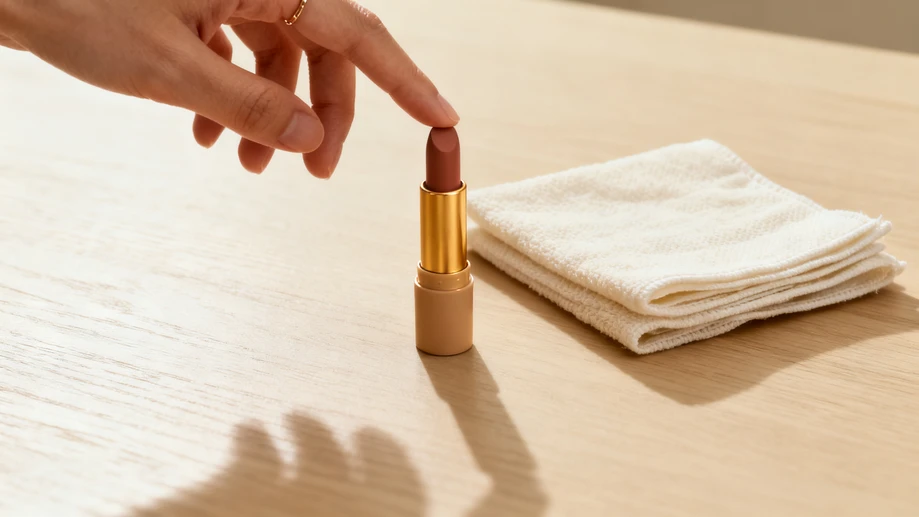
Try warming your lipstick on your clean fingertip for two seconds before applying it to get smoother flake-free long-lasting lip looks
This tiny underrated beauty trick eliminates mid-day lip cracks, uneven color patchiness and awkward dry tight feeling many people struggle with daily when wearing matte lip products
Nearly every makeup wearer has run into the same frustrating scenario: you spend ten minutes building out a full face of polished makeup, pick the exact lipstick shade that matches your outfit perfectly, and step out the door feeling confident. By midday, after finishing a quick lunch and sipping a few drinks, you catch a glimpse of yourself in your phone’s front camera and freeze. The pigment along the edges of your lips has worn away unevenly, dark clumps of product are wedged deep in every fine lip line, and the dry layer of remaining lipstick is pulled so tight across your lips you can feel a faint stretch when you smile. Most people blame their own lack of lip prep for this mess, so they slather on a thick layer of balm before reapplying new color, only to end up with a smudged, slippery mess that transfers to every cup, collar and even person you lean in to greet for the rest of the day. You can swap out a dozen different lip formulas and test every popular lip prep hack you see online, and you will still run into this exact same problem, because the root of the issue is a tiny, overlooked detail in how you interact with the lipstick right before it touches your lips.
The science behind this near-magical fingertip warming trick is surprisingly simple, and it ties directly to the base ingredients that make up every standard bullet lipstick. Most lip color formulas use a blend of hard plant waxes, soothing oils and ground color pigment that is designed to stay solid at regular room temperature to avoid melting inside your makeup bag on warm days. When the ambient temperature is cool, especially during fall and winter months, that wax base forms tight, rigid crystalline structures that cannot flex to fit the tiny, uneven grooves of your lip texture. When you swipe the cold, hard stick directly across your lips, all you are doing is leaving a thin, brittle layer of pigment sitting on top of the raised ridges of your lips, with no product filling in the gaps between them. Those raised edges wear off the second you press your lips against any surface, and the brittle layer cracks the second your lip skin stretches to talk or smile, creating that patchy, flaky look that is impossible to fix without wiping all the product off and starting over.
Warming the tip of the lipstick for exactly two seconds on the pad of your clean, dry fingertip gently raises the temperature of the top layer of the product to match your natural body heat, sitting right around 36 degrees Celsius. That temperature is just high enough to soften the rigid wax crystals into a soft, semi-fluid consistency that will not run or drip off your fingertip, but will spread evenly to fill every single tiny lip line without leaving thick clumps behind. You never want to use a hair dryer, hot water or any other heat source to melt the whole lipstick stick, because that will break down the stable balance between wax, oil and pigment permanently, making the whole formula separate and turn grainy once it cools back down. All you need to do is make sure your fingertip has no leftover lotion, hand sanitizer or food residue on it, then twist the lipstick out just far enough to expose the tip, and rub the pad of your finger across the surface of the product two or three light times to pick up a thin, even layer of warmed color.
Instead of swiping the lipstick directly across your lips after this quick warmup, pat the thin layer of product from your fingertip across the surface of your lips first, and then run the softened lipstick stick lightly over the top to add extra depth of color if you want a more saturated finish. This method will not leave that weird heavy, plastic-like feeling that many full-coverage matte lipsticks are known for, because the product is not sitting on top of your skin as a hard separate film, it is actually fused gently to the natural texture of your lips. Most people who try this trick for the first time find that their lipstick stays evenly pigmented for three to four hours longer than it did before, with barely any transfer onto drinking glasses, and no random cracking or flaking even if you forget to reapply lip balm for hours after you put your makeup on. Even after eating an oily meal, you will be left with a soft, even tint across your lips that looks intentionally blurred, instead of the messy half-worn patch that usually forces you to duck into a bathroom to do a full touch up.
This tiny tweak to your makeup routine does not require any extra products, extra budget or extra time out of your morning schedule, and it works on every single type of lipstick formula from sheer tinted balms to ultra-matte long-wear shades. Even if you have slightly chapped lips with tiny peeling spots, you can run a warm damp cotton pad across your lips for ten seconds first to wipe away loose dead skin before using this fingertip warming method, and you will end up with a smoother, more natural lip finish than you could ever get by piling on multiple layers of lip primer, balm and setting powder. You will no longer have to waste half your lunch break dabbing at smudged lip color in the public restroom, and every single one of your existing lip products will perform far better than they did the day before.