
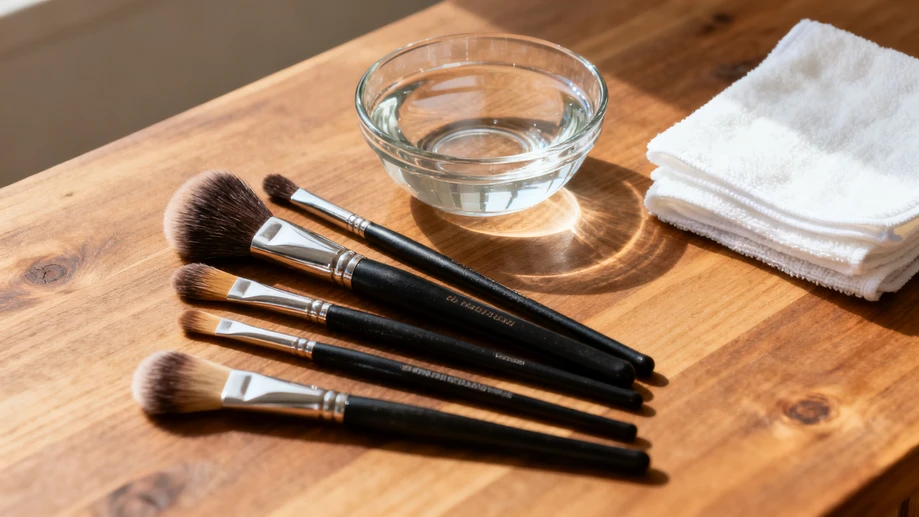
The common mistake of rinsing makeup brushes with hot water you never notice is ruining your go-to beauty tools far faster
This little known beauty tool care fact explains why your brushes lose bristles and streak makeup even after regular deep cleaning, and helps you extend their service life easily
Most people develop their own casual makeup brush cleaning habits without checking professional care guidelines, especially after a long day when all you want is to get grease and leftover foundation off the bristles as quickly as possible. It is extremely common to turn on the hot water tap, hold the whole brush under the running stream, and even add a little body wash or facial cleanser you grab from the sink to cut through heavy foundation residue. A lot of people even think hotter water works better to dissolve oily makeup product and kill bacteria stuck deep in the bristle clusters, so they turn the water temperature up to the point that it feels warm enough to the touch on their palm. Few people stop to consider that this seemingly efficient cleaning move is the number one cause of most damaged makeup brushes that fail long before their advertised service life.
Every bristle of a makeup brush, no matter it is made of natural animal sourced fiber or man-made synthetic material, has a special structure that is extremely sensitive to high temperature. Natural bristles have tiny overlapping cuticle layers on the surface, which are exactly the same as the structure of human hair strands. When exposed to hot water above 40 degrees Celsius, these small cuticle scales will fully open and warp outward, and the small amount of natural sebum that keeps the bristles soft, elastic and smooth will be washed away completely. Once the cuticle can no longer close back to its original flat state, the bristles will turn rough, brittle and easy to break off with the lightest pull, and the gaps between the raised scales will catch more makeup powder residue that you can never wash out fully even with repeated rinsing. For synthetic bristles that are marketed as waterproof and durable, high temperature will soften the fixed shaping layer on the surface of each fiber, making the neat bristle head lose its original sharp or rounded shape, turning a precisely cut concealer brush into a frizzy lump that can no longer lay product evenly on under eye areas.
Many long time beauty lovers have encountered the confusing situation that they wash their makeup brushes every week, but they still get random breakouts or tiny red rashes on their cheeks for no obvious reason, and their foundation application always leaves weird streaks that take extra minutes to blend out. Most of them blame the change on new skincare products or the bad quality of their latest batch of makeup, completely overlooking the fact that the damaged, cuticle-lifted bristles on their hot water cleaned brushes have become a perfect breeding ground for hidden bacteria that cannot be rinsed away easily. Even if you use disinfectant to clean these damaged brushes regularly, the rough surface of the warped bristles will scratch the delicate skin on your face slightly every time you apply makeup, leading to hidden irritation that shows up as dullness and sensitivity over time. Statistics from beauty care research show that people who habitually use hot water to clean their makeup brushes will lose 70 percent of their tools’ original good performance within three months, which is less than a quarter of the expected two year lifespan of a well maintained brush.
The correct care routine that takes no extra time at all only requires you to make a few tiny adjustments to your existing cleaning steps. You only need to use room temperature cool water or slightly warm water that has no obvious hot feeling when you touch it with your fingertips, and keep the bristle head pointing downward when you rinse, to make sure no water seeps into the connection point between the bristle cluster, the metal ferrule and the wooden or plastic handle. This small move can prevent the internal adhesive that holds the whole brush together from melting and dissolving after long term water exposure, which stops the entire bristle head from falling off the handle completely unexpectedly. After you finish washing, never twist or squeeze the bristles hard to get rid of extra water, you just need to press the bristle head gently against a clean lint free towel or absorbent paper to squeeze out all excess moisture, then reshape the bristle head back to its original form with your finger tips, and lay the whole brush horizontally on a dry towel in a well ventilated shaded place to dry naturally. You should never put wet brushes under direct sunlight, use a hair dryer to blow them dry, or place them next to a heater or radiator to speed up the drying process, since all these high temperature environments will cause the same bristle damage as rinsing with hot water.
Sticking to this correct low temperature cleaning method will bring far more benefits than you can imagine in your daily makeup routine. The bristle structure of your brushes will stay intact and smooth for years, keeping a consistent soft touch and perfect powder picking ability that never wastes extra makeup product or leaves uneven patch on your skin. You will no longer suffer from random unexplained breakouts caused by residual bacteria trapped in damaged bristles, and you can save a huge amount of money that you would have spent replacing broken brushes every few months. Many people who have tried this care routine for the first time report that their three year old makeup brushes perform exactly as well as the day they first took them out of the packaging, which is a pleasant surprise no one expects from such a tiny, easy change to their existing cleaning habits. This small unnoticeable beauty tool care tip does not require you to buy any special expensive cleaning products, and it delivers a far more satisfying long term effect than most fancy makeup tools that are heavily advertised on social media.