
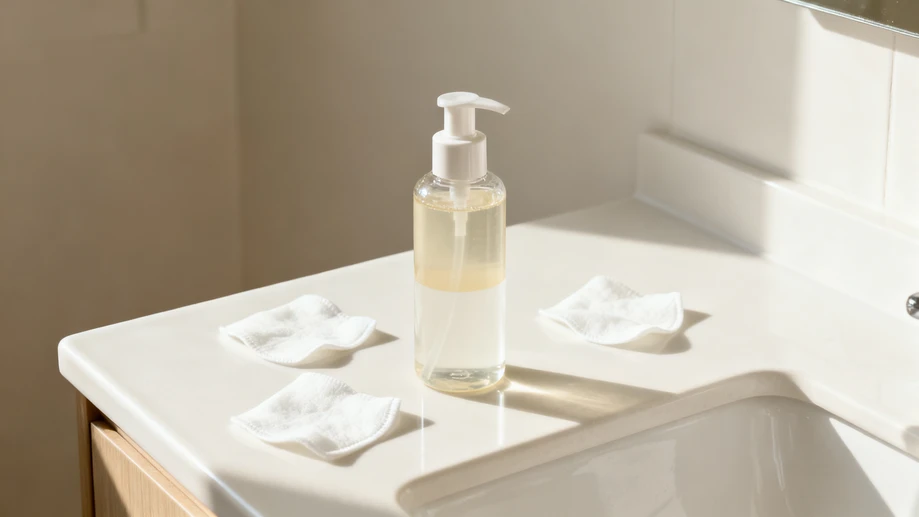
Most people have long misunderstood that separated two-layer cosmetic products are fully spoiled and need to be thrown away immediately without a second thought
This little shared practical beauty knowledge explains the special physical properties of water-oil mixed cosmetics, and teaches people to identify real spoilage to avoid misdiscarding products with high active content
If you have ever rummaged through your bathroom cabinet and pulled out a forgotten bottle of makeup remover, cleansing water or antioxidant toner that has clearly divided into two separate layers of different textures, you may have assumed the product has gone bad in storage and tossed it straight into the trash can without hesitation. This is an extremely common experience for beauty consumers around the world, and a large number of perfectly usable cosmetic products with high concentration of active ingredients end up in landfills every year just because users confuse normal physical separation with complete spoilage. Even many long-term beauty lovers do not get the correct science behind this phenomenon, and they often waste dozens or even hundreds of dollars of effective products for no reason, while missing out a type of skincare formula that is far gentler than most mainstream fully homogenized products.
The core reason why cosmetic manufacturers intentionally create this water-oil separated formula system starts with the inherent solubility limitation of active ingredients. Many highly effective skincare components including plant essential oils, fat-soluble vitamin derivatives, and nourishing emollients cannot be fully dissolved in the water-based phase that contains hydrating factors and gentle preservatives. If brands want to force these two incompatible phases to mix evenly for a long time, they have to add a large amount of synthetic emulsifiers and stabilizers that may trigger redness, stinging and allergic reactions for people with sensitive skin or damaged skin barriers. The two-phase separated structure removes all those unnecessary emulsifying additives, leaving a far cleaner ingredient list that works perfectly for areas with extremely thin skin around the eyes and lips.
It is not hard for ordinary consumers to tell the normal temporary separation from real product spoilage as long as they grasp a few simple and practical judgment rules. For a normal unspoiled two-phase cosmetic, the two layers will blend completely and turn into a uniform misty, milky or slightly turbid state after you shake the bottle vigorously for 20 to 30 seconds, with no strange agglomerates, suspended particles or peculiar sour, rotten smells appearing. Once the product has actually gone bad due to long term exposure to high temperature or bacterial contamination, you will see fuzzy mold spots growing at the junction of the two phases, the whole liquid will give out a fermented rotten odor, and no matter how long you shake it, the two layers will not mix into a uniform and stable state, with obvious flocculent precipitates floating around in the mixed liquid.
There is also a little lesser-known usage tip for this type of two-phase cosmetic products that can help you get the best possible effect without wasting a single drop of the nourishing active ingredients. You should never pour the liquid out directly before shaking the bottle, because the first few drops of liquid that flow out from the pump or spout will be mostly the upper oil phase or the lower water phase that has stayed separate for days, leading to extremely uneven texture that can not bring the ideal nourishing or cleansing effect. You are also advised to finish using the whole bottle within three to four months after the first opening, because although the formula does not contain extra emulsifiers, the contact with air and fingers will still slowly introduce tiny bacteria that may break the stable structure of the two phases and cause unnecessary spoilage.
Many beauty content platforms rarely mention this small but highly practical cosmetic knowledge, so a lot of consumers still take the clear layered state as a sign of unqualified production or expired products. In fact, this formula design has been widely used in medical skincare products for many years, and the unique physical state of two separate phases is a clear proof that the product does not add too many redundant synthetic additives that may irritate your skin. Next time you see a clearly separated cosmetic product on your counter, do not rush to throw it away, take a few seconds to check its state, shake it well, and you will get the full effect that the formula is originally designed to deliver.