
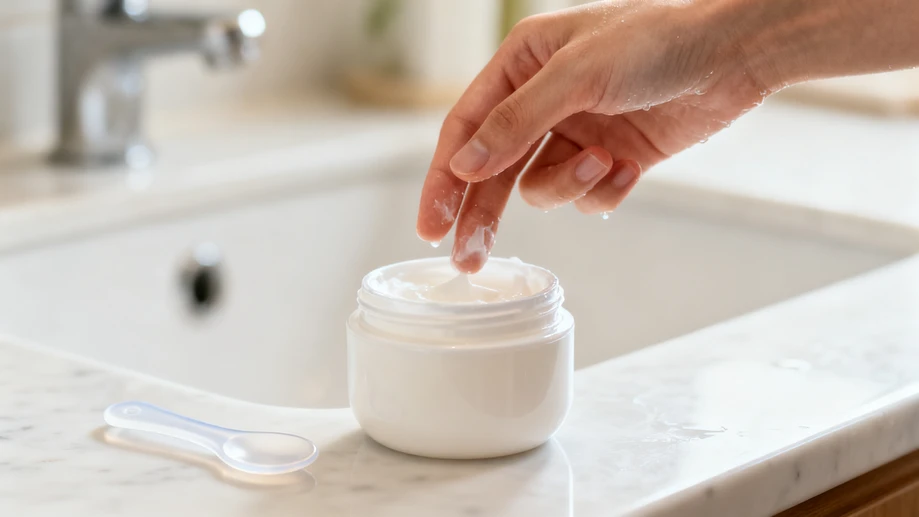
Most casual skincare followers never realize that repeated bare finger dips into open jarred skincare products quietly cut their usable life far short of printed expiry dates
This little discussed common daily mistake leads to hidden microbial contamination that triggers random breakouts and stubborn irritation even on the most well-cared for complexions
Have you ever spent months saving up for a rich, nutrient dense jarred moisturizer that received rave reviews from across the skincare community, only to find it starts leaving tiny unexplained pimples along your jawline and forehead after three or four weeks of regular use? Most people will blame sudden seasonal shifts, new makeup products, or even changes in their sleeping schedule for this unwelcome reaction, and very few will ever point the finger at the tiny, unthinking habit they repeat every single time they reach for their skincare shelf. You might double check the printed expiry date on the bottom of the jar, confirm it still has six months left before it is set to expire, and convince yourself there is no possible way the product itself could be the source of your skin troubles, but that line of thinking misses a critical hidden factor that almost no consumer is warned about on standard packaging labels.
The human skin naturally hosts a wide range of harmless resident bacteria on its surface, even after you wash your hands thoroughly with antibacterial soap, these microbial colonies will repopulate on your fingertips in less than 20 minutes to maintain the skin’s natural protective barrier. Every time you dip your unprotected finger into the dense, rich texture of a jarred moisturizer or overnight mask, you leave a small portion of these bacteria trapped deep within the product formula. Your bathroom, where most people store their open skincare products, is usually a warm, humid space that sees regular spikes in temperature after hot showers, creating the perfect breeding ground for these trapped microbes to multiply at an exponential rate. Independent lab tests conducted by cosmetic chemistry teams have found that the colony forming unit count in a jarred product used exclusively with bare fingers for four weeks can rise to more than 100 times the safety threshold set for leave-on skincare products, a level that will not produce any obvious sour smell, noticeable texture discoloration, or visible mold spots that most consumers associate with spoiled products.
Many people who are aware of the basic contamination risk try to fix the problem by grabbing a small plastic or silicone spatula to scoop out their product, but they end up making another equally harmful mistake that negates all of those protective efforts. They will place the used spatula directly on the edge of their bathroom sink, leave it sitting out in the open air for hours or days between uses, and then dip it straight back into the jar the next time they need to get some product out. The surface of the bathroom sink is one of the most bacteria dense spots in an ordinary household, covered in leftover residue from toothpaste, hand soap, and the same microbes that thrive in humid bathroom conditions, so the spatula will pick up far more contaminants than a freshly washed fingertip ever could. A lot of users also make the bad habit of scooping out a large blob of product on their palm, realizing they took more than they need for a single application, and scraping the leftover excess right back into the jar, pushing all of the bacteria picked up from their palm and the open air straight back into the untouched layers of the formula.
The correct routine for using open jarred skincare products is far simpler than most cosmetic content creators would make it seem, and it does not require you to buy a whole set of fancy specialized tools to stay safe. All you need to do is set aside a small set of spatulas, wipe them completely clean with rubbing alcohol after every use, let them dry fully, and store them inside a small sealed food grade plastic bag that you only open when you need to take one out to use. You should always estimate the exact amount of product you need for each face and neck application before you scoop it out, and never put any leftover product that has touched your skin back into the main jar no matter how small the amount is. If you notice that the previously smooth, uniform texture of your product starts to develop tiny separate water droplets along the top edge, or you feel a faint, unfamiliar stinging sensation the second you spread it across your clean skin, you should stop using it immediately even if it is months away from the printed expiry date, as those are the first obvious warning signs that the microbial load inside has already far exceeded the safety limits.
This small, easy to adjust daily habit does not only apply to jarred moisturizers, it also works for all types of open, non-airtight skincare products that you dip your fingers into directly, including wash-off face masks, thick body scrubs, lip balms stored in wide mouth jars, and even powdered clay masks that come in open containers. Many people spend hundreds of dollars on high performance formulas loaded with stable active ingredients designed to soothe irritation, fade dark spots, and repair damaged skin barriers, but they completely undermine all of those expensive benefits by introducing massive amounts of unregulated bacteria into the product every single time they use it. Making this tiny adjustment to your daily skincare routine will not extend the life of your product past its natural stability window, but it will make sure every single drop you use on your skin is as clean, safe, and effective as the day you first twisted off the brand new seal.