
Most casual makeup users have long overlooked a tiny critical detail about drying their freshly washed makeup brushes properly
This easily overlooked wrong drying habit cuts more than half of your soft makeup tools’ service life and brings hidden irritation risks to your facial skin for daily use
Talk to anyone who has dabbled in daily makeup for more than half a year, and you will almost always hear similar complaints that their makeup brushes start to shed tiny loose hairs after two or three washes, or the whole bristle head goes crooked and loses its original fluffy shape after a short period of use. Most people blame the poor quality of the brushes they bought, or think they are too rough when rubbing the bristles with cleaning soap, but very few of them connect this annoying problem with the step right after the washing process, which is exactly the drying method most people take for granted. This small unnoticeable habit often leads to a series of side effects that no one expects, ranging from reduced tool lifespan to hidden skin health issues.
The vast majority of makeup lovers develop a very intuitive habit right after rinsing the foam off their brushes, which is to hang them upside down with the bristle end pointing to the ground, or even insert the wet brushes directly into a hollow cup with the bristle side facing down, to let all the excess water drip out from the bristle gap naturally. This logic seems totally reasonable at first glance, because people are eager to get rid of all the surplus water as soon as possible to speed up the drying process, and they do not notice the hidden structure of the brush that has been hidden under the soft bristles all along. Every makeup brush has a short metal ferrule that connects the bristle bundle and the handle, and the bristle bundle is fixed to the bottom of the ferrule entirely with water-soluble adhesive, which is never as waterproof and durable as most people assume.
When you hang the wet brush upside down or place it with the bristle end pointing down, the accumulated water that seeps through the bristle fibers will flow directly into the junction between the ferrule and the handle little by little, and keep soaking the solid adhesive layer hidden inside the structure. After three or four times of repeated soaking, the original strong adhesive will gradually soften and lose its adhesion force, which directly leads to the situation where the whole bristle head becomes loose and starts to fall out easily when you swipe it on your face. Worse still, the narrow enclosed space inside the ferrule cannot get enough air circulation after being filled with water, so the residual moisture will not dry out even after two full days, creating a warm and damp environment that is perfect for mold and bacteria to breed, and these invisible microorganisms will be transferred to your foundation, blush and eye makeup products the next time you use the brush, causing unexplained small closed comedones and red rashes on sensitive facial skin.
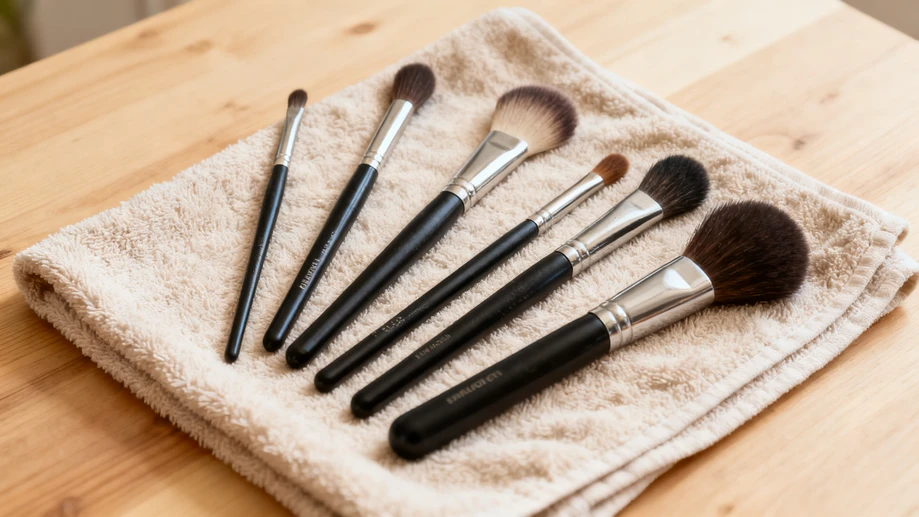
The correct drying method that is far less well known than regular washing steps is surprisingly simple and cost-free, and it does not require you to buy any special overpriced brush drying racks or other specific tools. As soon as you finish washing all the makeup brushes, take a piece of clean, soft, lint-free cotton towel, wrap the wet bristles gently inside the towel and press down slowly to squeeze out most of the excess water from the bristle gaps, never twist or wring the bristles hard no matter how much water is trapped inside, as this chaotic force will mess up the original neat arrangement of the bristle fibers and make the brush head lose its round fluffy shape. After you squeeze out most of the water, arrange all the wet brushes in a neat single layer, lay them completely flat on the surface of the dry towel, and place the whole arrangement on a flat, ventilated countertop far away from direct strong sunlight.
Under normal indoor temperature and common humidity level, most wet makeup brushes will get fully dried within 6 to 8 hours, and the tiny amount of residual moisture left on the surface of the bristles will evaporate naturally in the air without any chance to flow into the adhesive connection point hidden inside the ferrule. People who have stuck to this flat drying habit for more than half a year have reported that their ordinary makeup brushes can maintain a soft, non-shedding working state for at least 18 to 24 months, which is three to four times longer than the service life they get with the old upside-down drying routine. There is no extra cost or complicated operation required for this small adjustment to your makeup tool cleaning process, but it saves you a lot of unnecessary spending on replacing damaged brushes, and more importantly, it eliminates most of the hidden bacterial pollution risks that come with wrongly dried makeup tools.