
Most people overlook the proper drying method for wet makeup brushes that keeps bristles soft and extends their total usable life for years
This little practical tip explains why standing wet makeup brushes upright to dry ruins their shape and texture faster than most regular daily wear and tear you might expect
Nearly every person who uses makeup regularly has developed a routine for cleaning their tools, usually setting aside 15 to 20 minutes once every one or two weeks to work mild shampoo through every bristle and rinse away caked-on foundation, eyeshadow residue and built-up facial oil. Most of these people, after finishing the rinse, will grab their usual brush holder, set every wet brush upright with bristle side pointing upward, and walk away assuming the water will drip out slowly and the whole set will be dry by the next morning. This seemingly logical move is actually one of the most common mistakes that shorten the lifespan of even high-quality, carefully made makeup brushes, and very few casual beauty users ever learn how much damage this small habit causes until their favorite fluffy foundation brush starts shedding bristles mid-use.
The core of this hidden problem sits at the very base of every brush head, where hundreds of individual bristles are bound together and fixed to the narrow plastic or wooden stem of the brush handle. The adhesive used for this connection is designed to hold firm through regular light contact with cosmetic products, but it does not hold up well against prolonged, direct exposure to standing water. When you set a freshly washed brush upright with the bristle end facing up, all the residual water trapped in the fibers will slowly flow downward with the pull of gravity, gathering right at the adhesive joint instead of dripping out of the tip of the bristles. Over multiple washes, this pooled water will gradually soften the adhesive layer, break the tight hold on the base of the bristle cluster, and leave the brush head loose, wobbly and prone to shedding individual hairs with every swipe across the skin.
This pooled water at the bristle base brings even more unwanted risks beyond loose bristles. The warm, dark, airless space formed by crammed bristles holding trapped moisture creates the perfect breeding ground for invisible bacteria and mild mold growth. Even if the surface of the bristles feels completely dry to the touch after a few hours, the water locked deep at the root can stay damp for more than 24 hours in humid environments. People who keep using brushes dried this way often notice small, unexplained breakouts or tiny red rashes pop up on their cheeks and eyelids that do not respond to regular skincare adjustments, and few of them ever connect the skin issue to their incorrect brush drying habit. Many people also make the additional mistake of aiming a hair dryer at wet brushes to speed up the drying process, which only adds extra damage: high heat will strip the natural soft oil coating off animal hair bristles, making them brittle, scratchy and prone to fraying, while synthetic fiber bristles can warp and lose their original shaped edge that lets them pick up precise amounts of product.
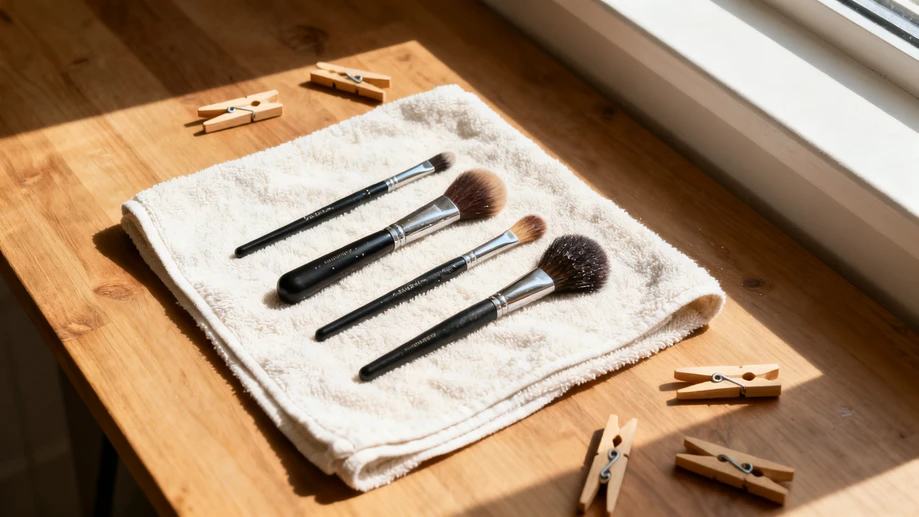
The correct drying method for makeup brushes takes barely any extra time and costs zero extra money, but it can double or even triple the total lifespan of every brush in your collection. Right after you finish rinsing each brush, gently squeeze out excess water from the bristle cluster with a clean, lint-free cotton towel, never twist or wring the bristles hard, as this can permanently bend the inner bristle fibers out of their original shape. Use your fingers to gently reshape the bristle head back to its original rounded or angled form, then hang the brush upside down with the bristle end pointing straight toward the ground. You can use simple clothespins to clip the handle end of the brush to the edge of a shelf, a hanging clothes line, or the top of a drawer left slightly open, so every drop of residual water can drip completely out of the bristle head instead of pooling at the base. If you do not have a place to hang them, laying the brushes flat on top of a thick, absorbent clean cotton towel laid out on a flat counter top works almost just as well, just remember to flip each brush over once every three to four hours to make sure both sides of the bristle cluster get equal exposure to flowing air.
Following this simple rule does not require any special expensive tools or complicated steps, but it delivers consistent noticeable changes after only two or three washes. You will notice that your brushes stay soft and bouncy far longer, never develop the weird crinkly frayed edge that makes precise eyeshadow blending impossible, and rarely shed random bristles that stick to your foundation layer mid makeup application. The lack of trapped moisture at the bristle root also cuts down bacteria growth dramatically, so you will no longer have to worry about random unexpected breakouts caused by dirty hidden residue in your old brush heads. Many people who switch to this correct drying habit find that they no longer need to replace their most used makeup brushes every few months, saving them hundreds of dollars a year that they previously spent on constant replacement tools that broke down way before their expected usable life was over.